10/25/21
Let’s really go back in time. The year is not 2021. It’s 2007 and I am a senior in college at the University of California Santa Barbara. I have climbed the ladder as a major in mathematical economics. I will end up graduating in the top of my class, with high honors and college-wide honors. My professors know me by name and will open every door they can for me.
By the end of my first year of college, math students were already groaning when I would walk into a lecture hall (even lecture halls with hundreds of students). They knew that I was capable of breaking the curve on a differential equations final in all of 15 minutes. They knew I didn’t care about their grades. They knew that I was already smarter than they were, and that I hit the books that much further on the weekends. I was cocky, competent, genius. And my focus during this time was not on the drudgery of law or business forecasting models. It was dreaming, in the clouds, and focused on the preservation of the environment and its natural resources. Believe it or not, environmental economics was my original specialty. And my aim was to become an environmental lawyer.
When I told my professors that I intended to apply to law school, they laughed at me. “Why!?” they plead. “You can do anything. You are so much more suited for business school or graduate school.” But I persisted. My family was a family of accountants, doctors, architects, etc. i.e. science and math, but not lawyers. I knew that law was the key to power, but I did not know why. I was curious. That’s right. I did not go to law school because of some drive to fight for justice or to make the world a better place. No, I was just curious about the nature of power. “Why is it us quantitative, analytical minds are not the ones with power?” I would ask myself. “Why is it that power always ends up going to the political science majors I know who don’t know anything about anything?” (Yes, that is how I thought back then. I have since learned the answers to my questions and have become humbled by those answers.)
My persistence paid off, and my professors wrote my letters of recommendation. Before I knew it, I was accepted to several law schools, including Boston College, Notre Dame, UC Davis, Baylor, Creighton, Vermont, and many others. Harvard and UC Berkeley gave me firm no’s (can’t really blame them in light of my politics). Baylor, Creighton, and Vermont offered me full academic scholarships. Eventually, I narrowed my list down to Creighton, Vermont, and Boston College. My top choices were Boston College and Vermont.
My parents eventually talked me down from Boston College. The cost of attendance was just too high. I had no scholarship there, and my parents were worried that if I went there I would bury myself in debt. This left Vermont and Creighton. Vermont had the top environmental law program in the country. Creighton was located in my family home of Omaha, so there was a wide family network of support in the area. Eventually, through my family’s firm nudging, I chose Creighton. The idea of going to Vermont to become a top environmental lawyer faded, and I submitted to becoming a traditional, civil attorney.
In hindsight, I am very happy with the path I chose. Creighton provided a fantastic education. It was a stepping stone to the person that I am today. The professors there were some of the most influential persons in my life, and the friends that I met there put a smile on my face to this day. The legal training was humdrum and traditional, in a good way, and gave me grounding from my “head-in-the-clouds” days at UCSB. Also, given the scholarships and wide-family network, my debt level coming out of law school was relatively low, to the point where now in my 30s I am student loan free and have a net value in the six figures. I’m not certain that would have happened had I chose an east coast school. Sometimes, taking the boring, sensible route is indeed the way to go (and frees you up to take ‘gap years’ of travel in the future).
But that does not mean that I do not wonder what would have happened had I chosen a different route. Which is why my day in Vermont was so eye-opening.
My day started in Ithaca, and unfortunately it was extremely foggy and dreary. The sun took on the look of the moon, and everything looked dismal.
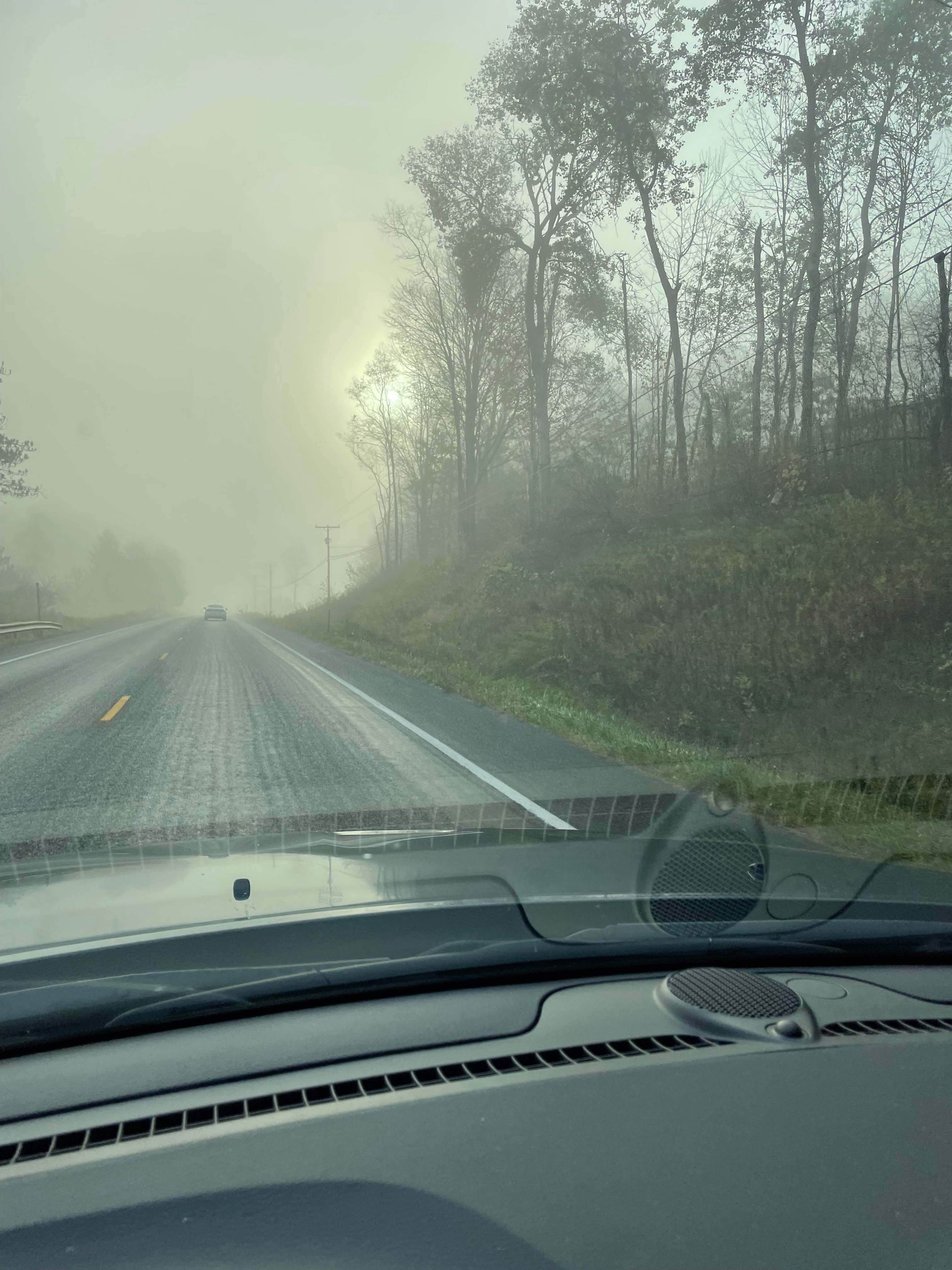
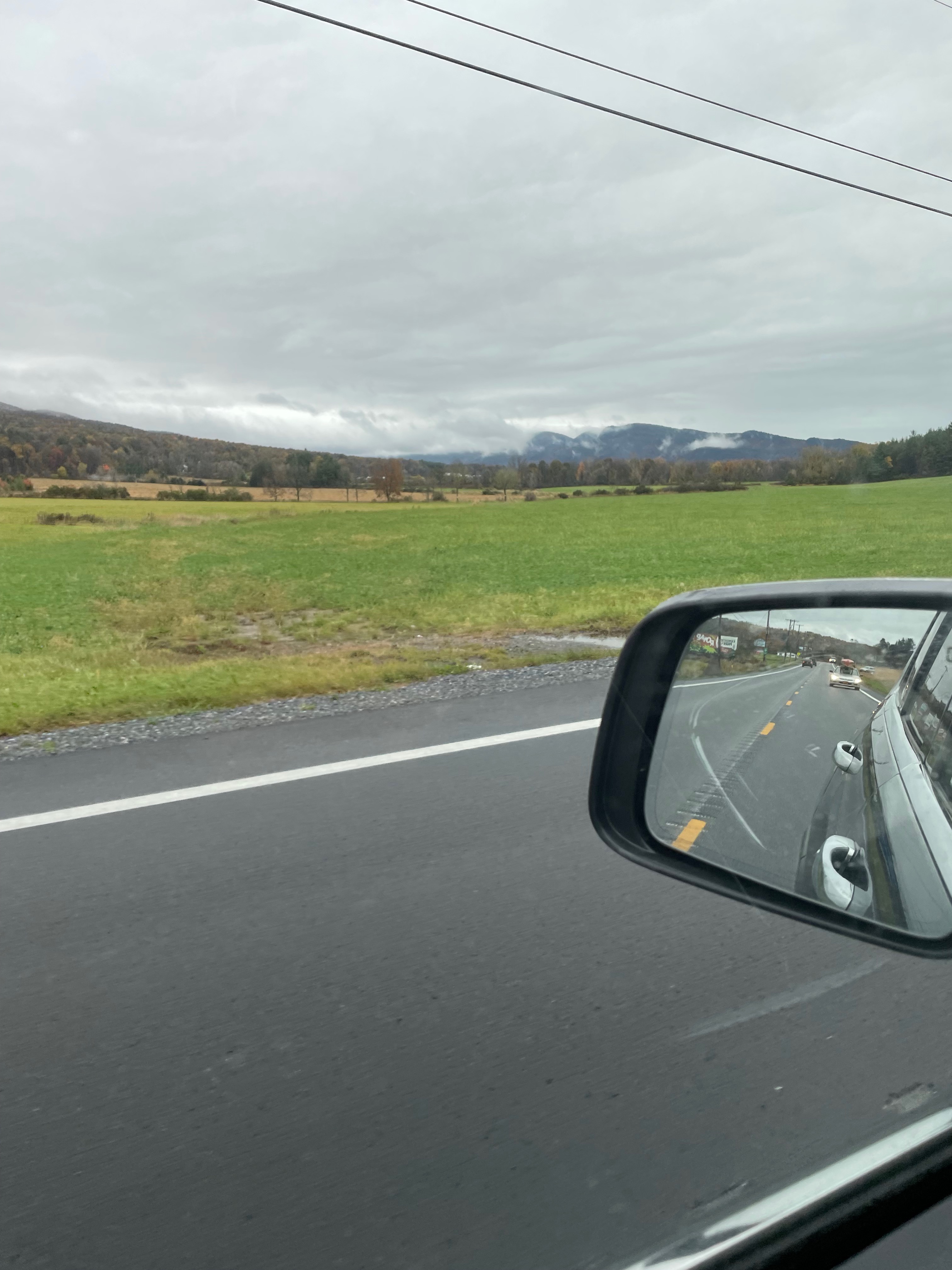
Things did not clear up, and most of my day was filled with rain, mist and fog. When on occasion the fog lifted, I could see that I was in a new landscape filled with mountains and beautiful fall colors. But these moments were far and few between.
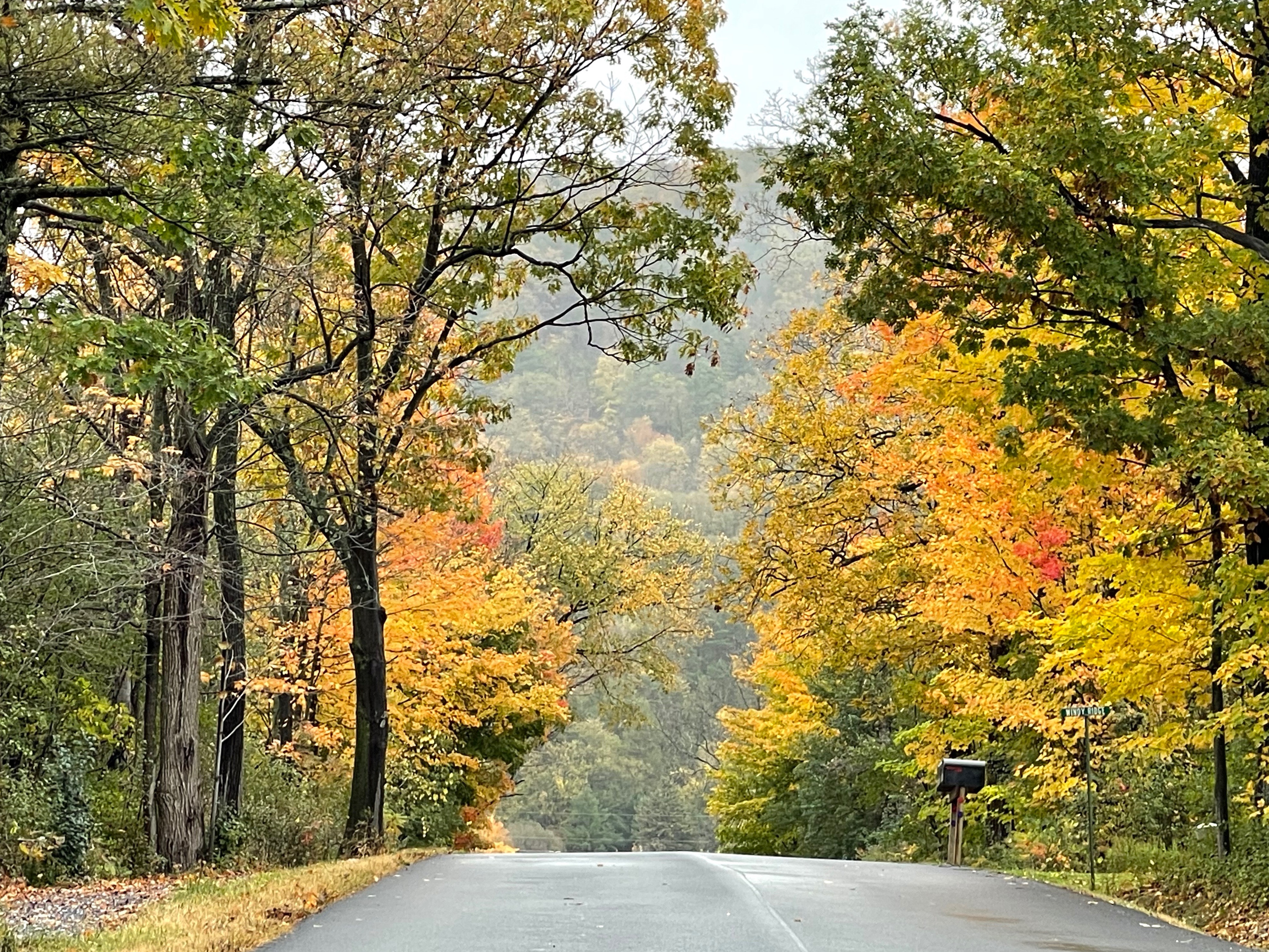
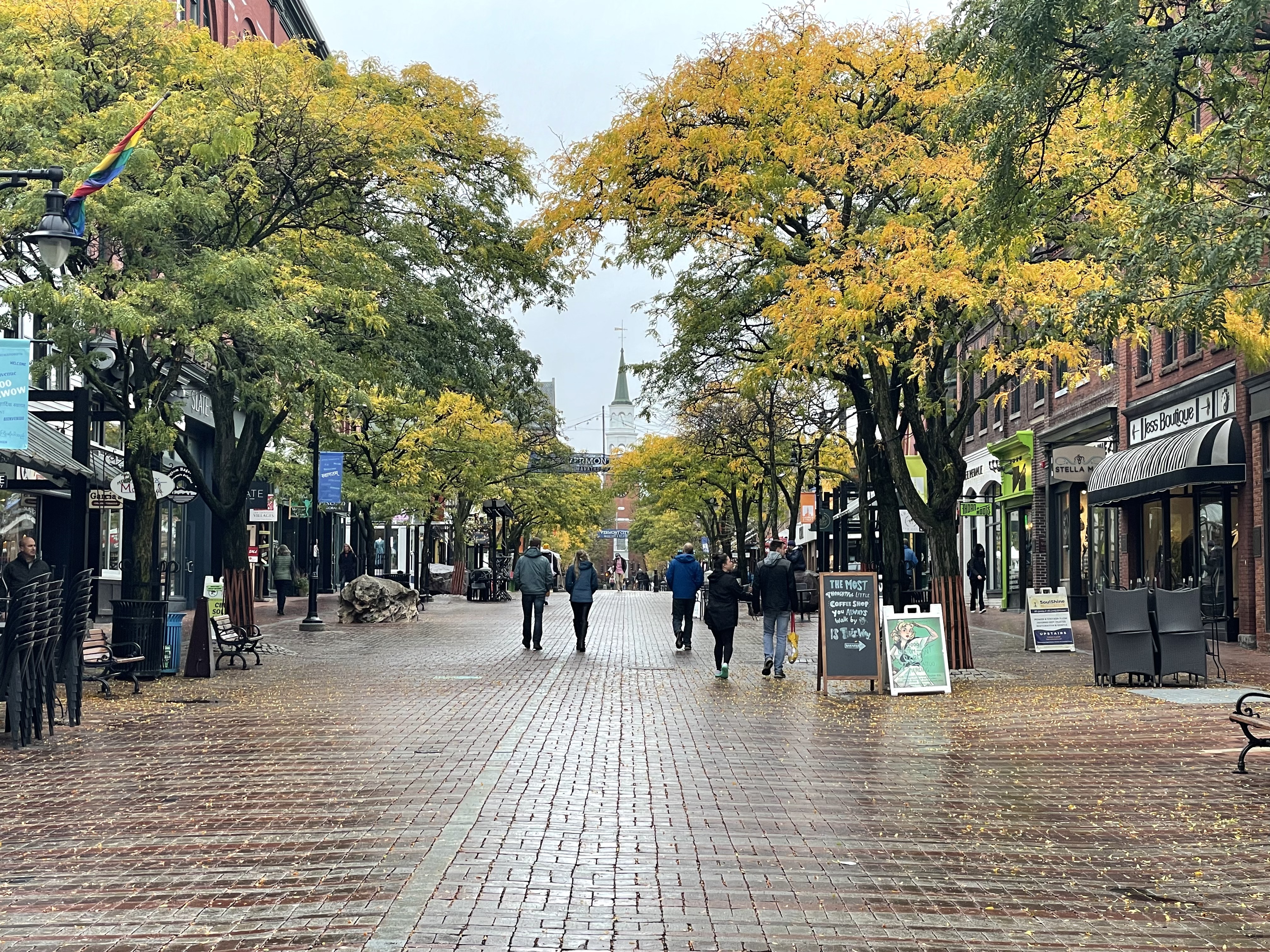
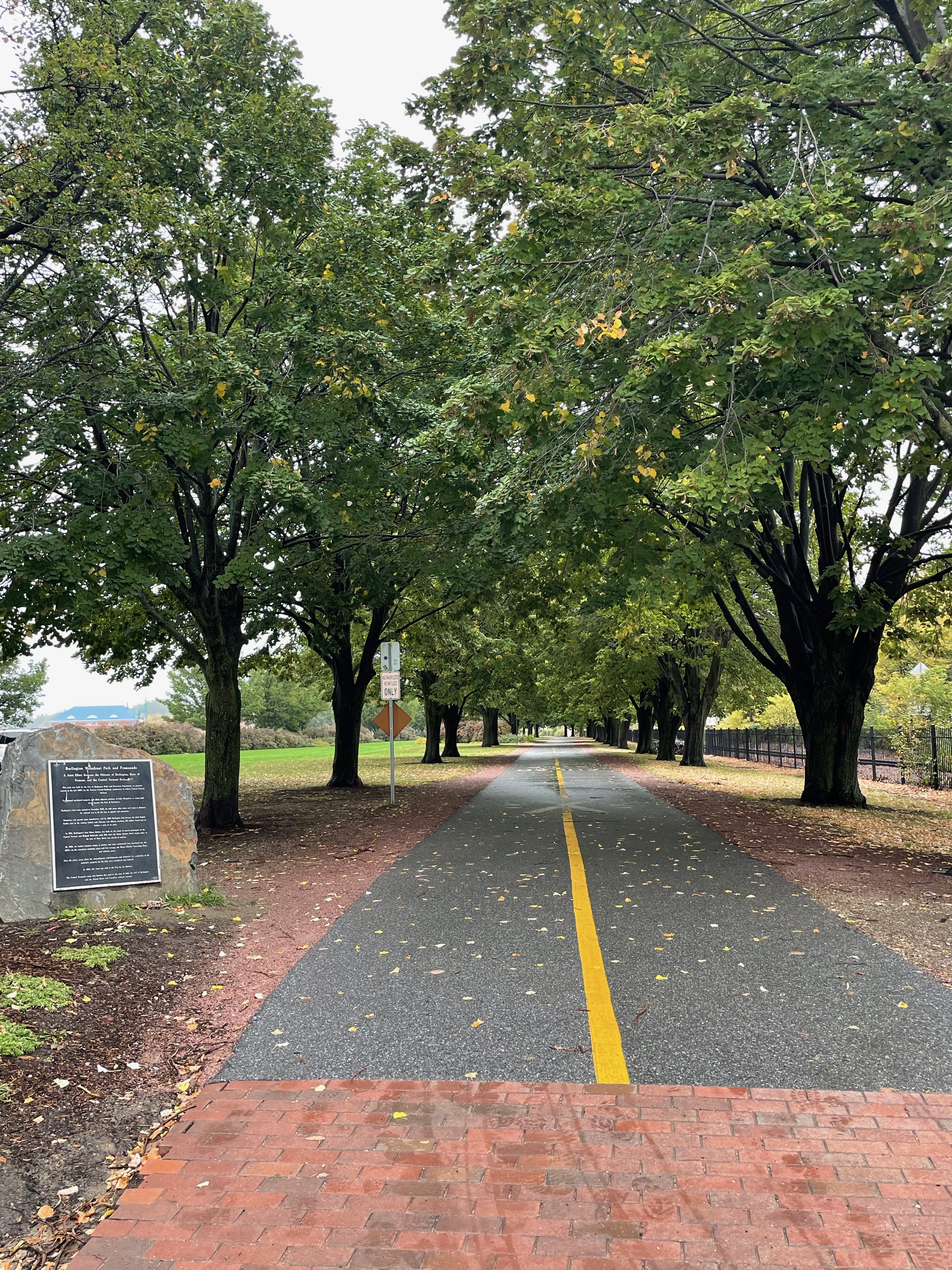
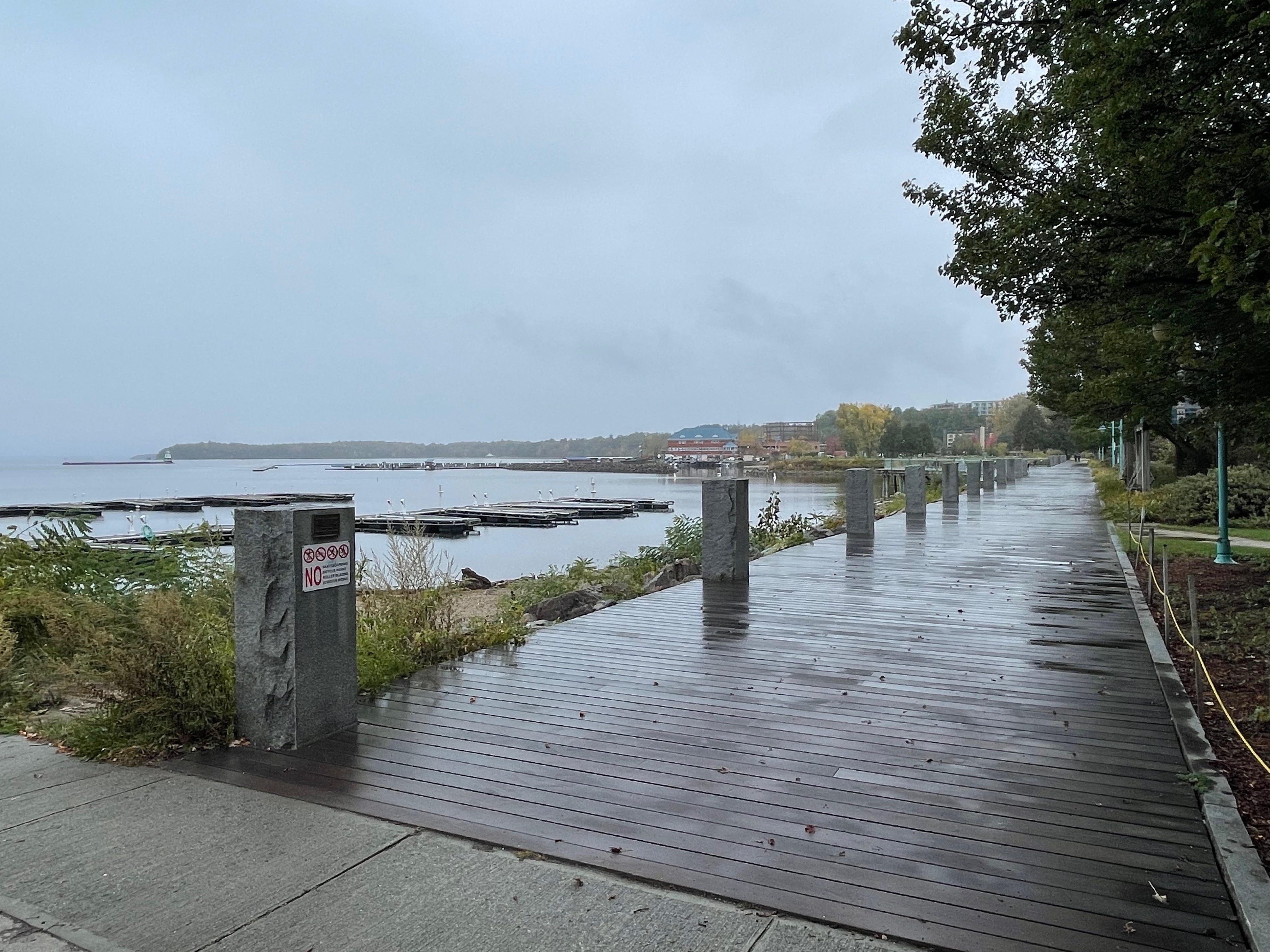
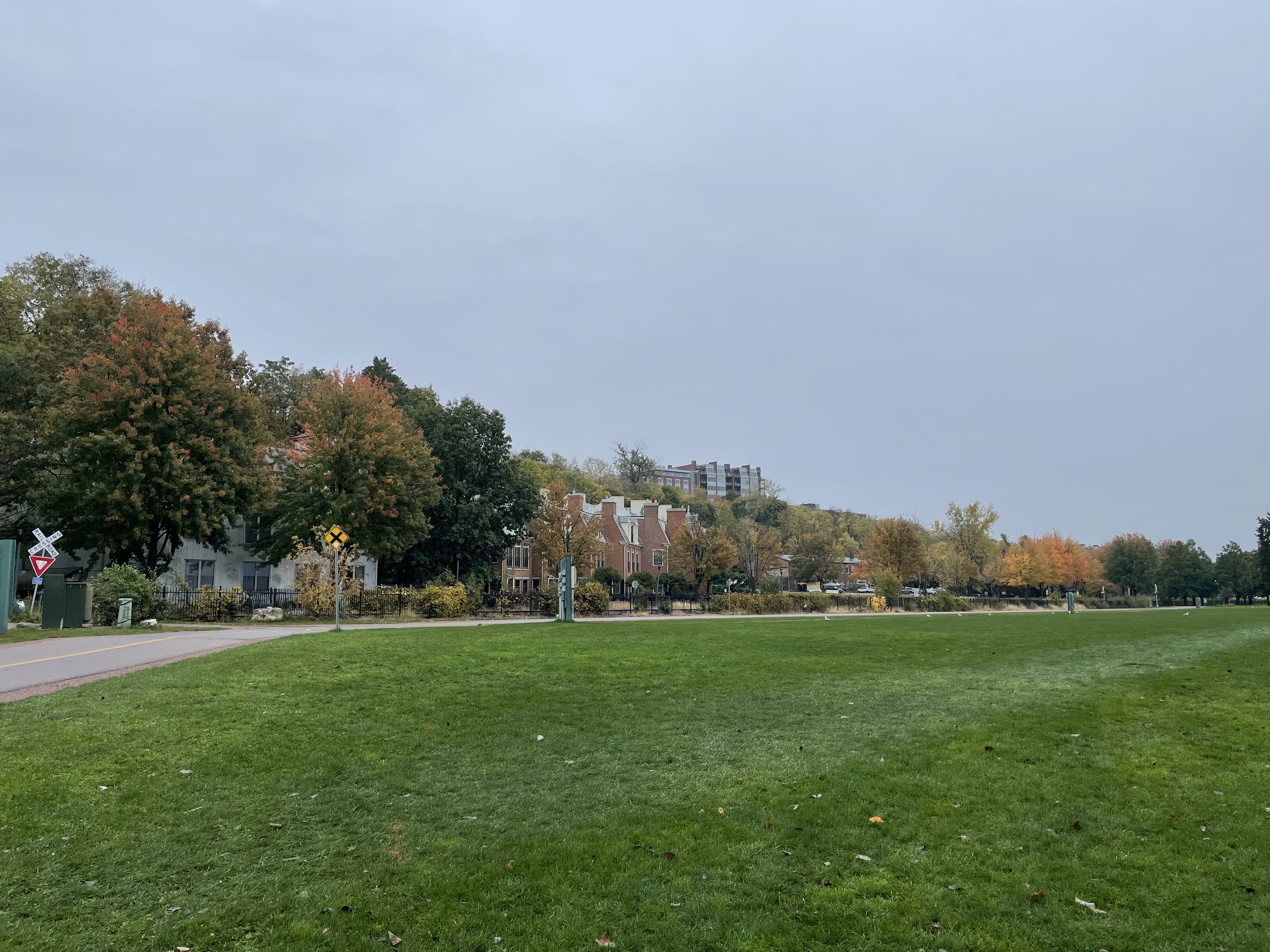
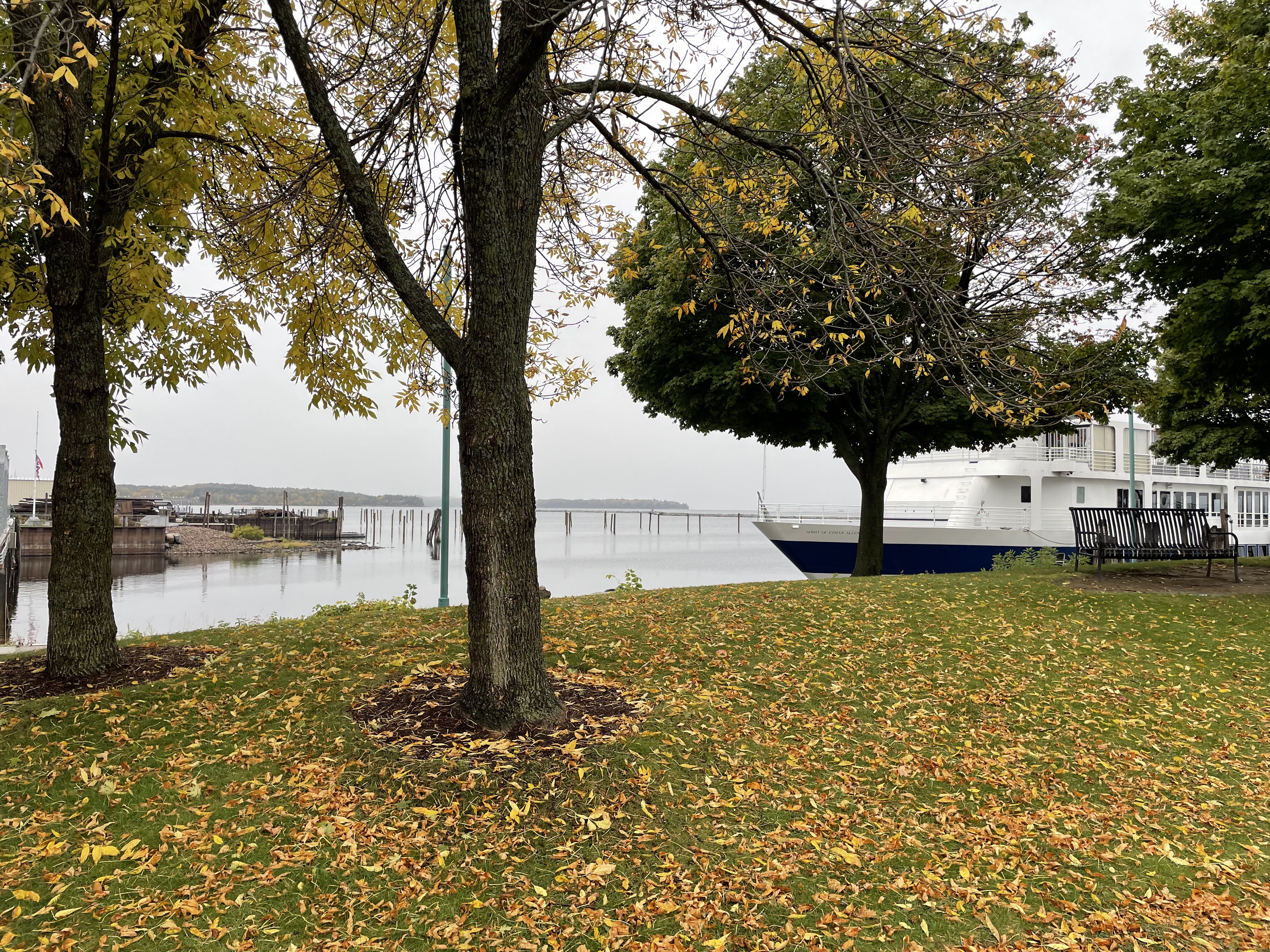
Eventually I made it to Burlington (home of Bernie Sanders), and everything here is so weird from what I am used to! It is not just liberal, it is over-the-top liberal. Masks are still required throughout the city for covid reasons, even if you are fully vaccinated. Everything is covered with bumper stickers showcasing people’s causes. And, I don’t know, people just seem abrasive and keep to themselves. There are no smiles or hellos from strangers. It was awkwardly quiet walking the streets, the polar opposite of my time in Marquette, Michigan. It makes me wonder what kind of person I would have become had I lived in this area during my formative law school years. It also makes me think about politics in general, and how much of who we are is formed by where we spend our time and who we spend our time with. As I used to teach my students at Mercy, so much of politics depends on geography. Anyways, that being said, it’s still a lovely place, even on a foggy, misty day:
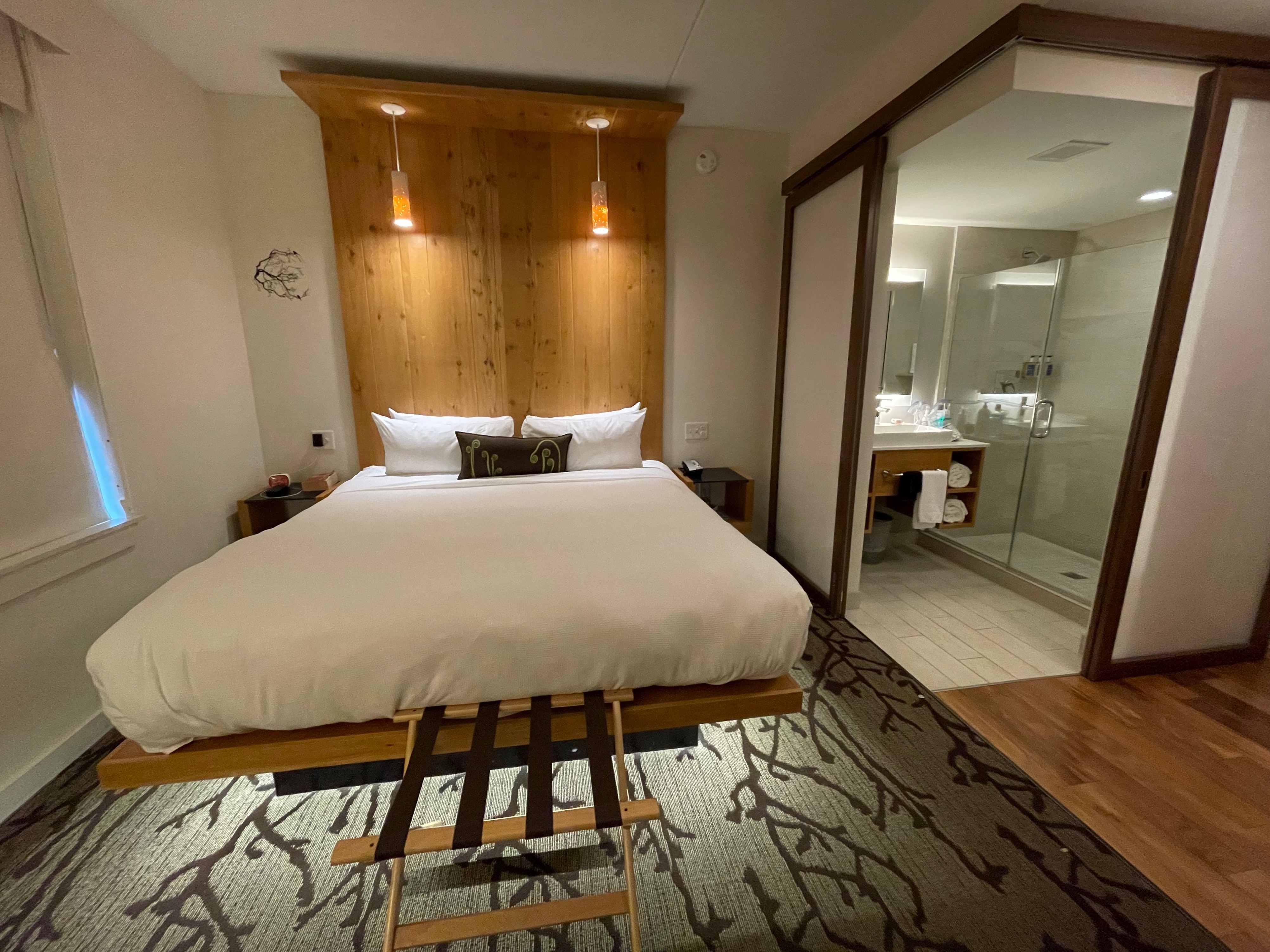
The real plus of the day is my hotel: the Hotel Vermont, probably the nicest hotel in the entire state. So, following a walk on the infamous Church Street here in Burlington, I’m pampering myself this evening, being a foodie and enjoying my stately room.


Yum! Tomorrow I finally reach my destination and the first State that I am judging for a potential future move: New Hampshire. But for tonight, well…when in Rome.
Cheers,
Rob
 robtaylortravels