10/30/21
Happy Halloween Weekend, blog readers! Today was the busiest day of my trip. As I am writing this, I am feeling sore from all of the walking; I’m gross, sweaty, stinky, but feeling satisfied with all that I explored and experienced. My first stop of the day was to Gettysburg.
For three days in July of 1863, a battle took place in and around the small town of Gettysburg, Pennsylvania. The battle was waged between General Robert E. Lee of the Confederate States of America, and General George Meade of the United States of America. For General Lee, the battle was intended to be the big kickstart to his second campaign and invasion of the North, following Lee’s largely successful campaign the previous year. For General Meade, a victory was desperately needed, both to appease President Lincoln and to overcome General McClellan’s military failures during the 1862 campaign. In particular, Lee’s ego had to be put in check after McClellan had failed to pursue Lee and his Army following the Battle of Antietam.
It is said that more men “fell during the Battle of Gettysburg than in any other battle on American soil before or since.” By the end of the battle on July 3, over 51,000 American boys and men were dead, wounded or missing. The dead and wounded in particular were spread about everywhere following the battle, their bodies decaying about the town. The situation (and probably the smell) grew so dire and unhygienic that the then Governor of Pennsylvania commissioned a local attorney, David Wills, to purchase some land to provide a proper burial for the Union dead. The land purchased has become known as the Soldiers’ National Cemetery.
The Battle ended following a failed advance of 12,000 Confederate troops across open fields known as “Pickett’s Charge.” Within one hour, Lee lost 5,000 troops in the charge. Lee was decisively defeated and forced to retreat. General Meade’s success at Gettysburg coincided with another Union victory by General U.S. Grant at Vicksburg, Mississippi on July 4. Suddenly, the tide was turning and the Union was starting to see victories in the Civil War. Up to that time, Abraham Lincoln was a largely despised President, being seen as more dictatorial than leader in his zealous drive of holding the Union together. Many in both the North and South felt that the still relatively young United States had fractured from England in the 1700s, so what if certain States wanted to split again to go their own way? The unpopular President Lincoln decided that it was time for him to give a speech and to attempt to frame the true reason for the war. He agreed to provide a “few appropriate remarks” at the newly purchased cemetery site.
Contrary to legend, Lincoln did not write his speech on the back of an envelope minutes before delivering it, but took great pains to draft and revise it. The speech, known today as the Gettysburg Address and consisting of just 272 words, is considered a masterpiece of the English language. It changed the tone of an ugly and terrible battle to being a sacrifice and inspiration for the living. I would go so far as to say that that speech is the true reason that we study Gettysburg today. It is the true reason that Gettysburg lives on in the American conscience, and is the true reason that we still visit the site of Gettysburg to this day. Without the speech, Gettysburg just becomes another Union victory alongside Vicksburg. But with the speech, the site has become hallowed. Indeed, that speech is the reason that I visited Gettysburg.
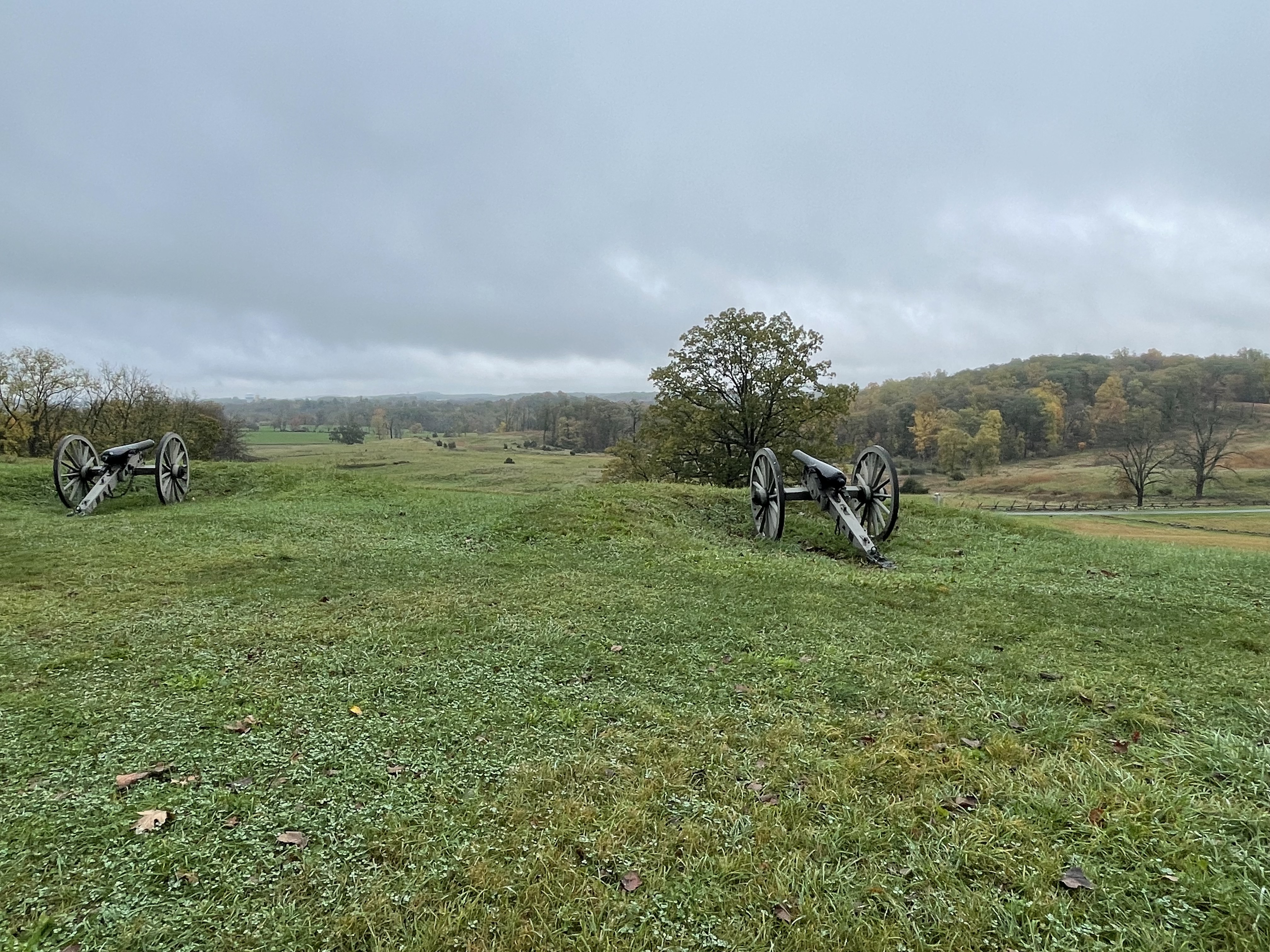
The speech was given on November 19, 1863 and begins, “Four score and seven years ago our fathers brought forth, upon this continent, a new nation, conceived in liberty, and dedicated to the proposition that all men are created equal.” Today, nearly seven score and eighteen years later, I stood at the exact spot where that speech was given. That spot looks like this:
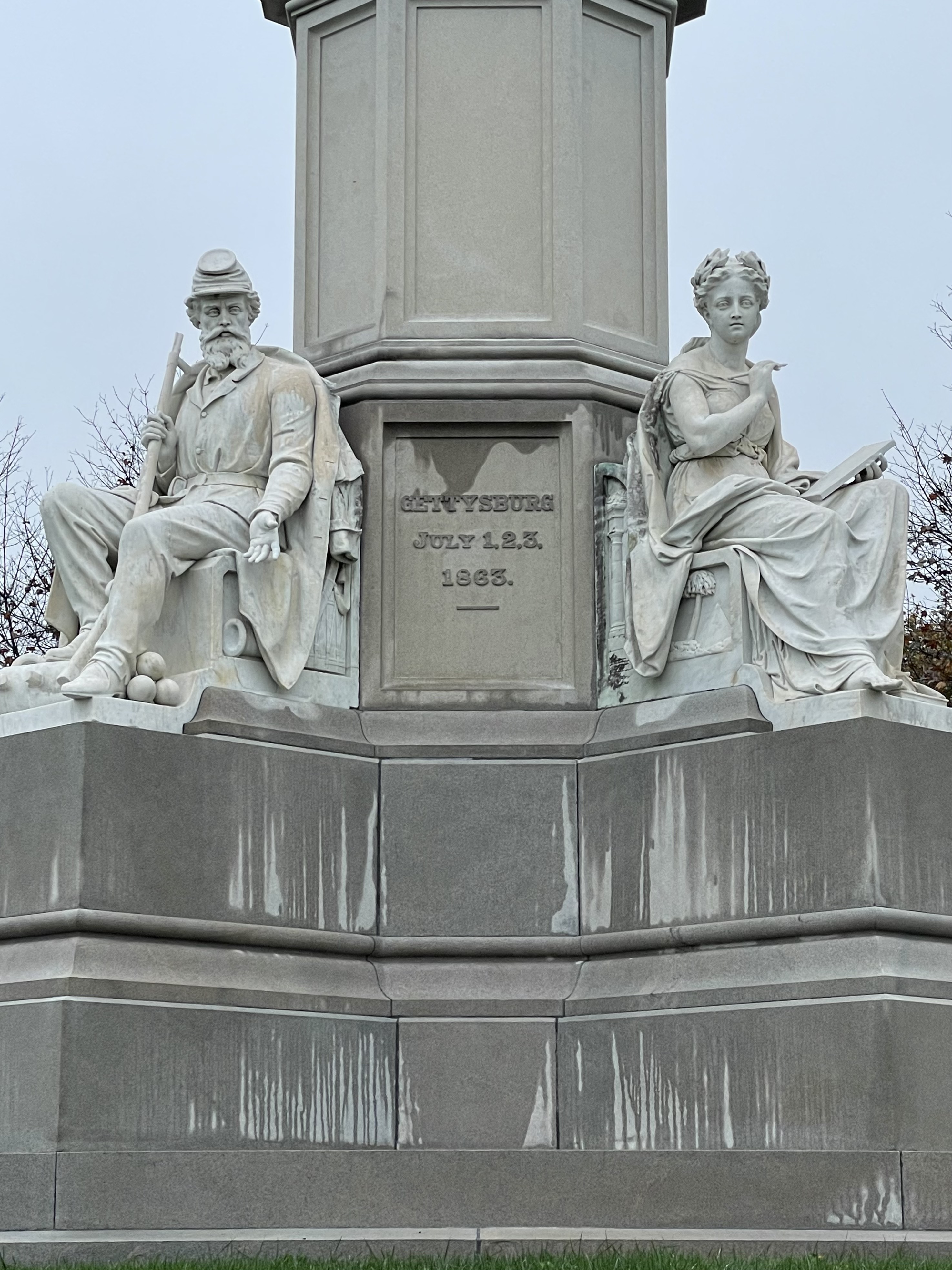
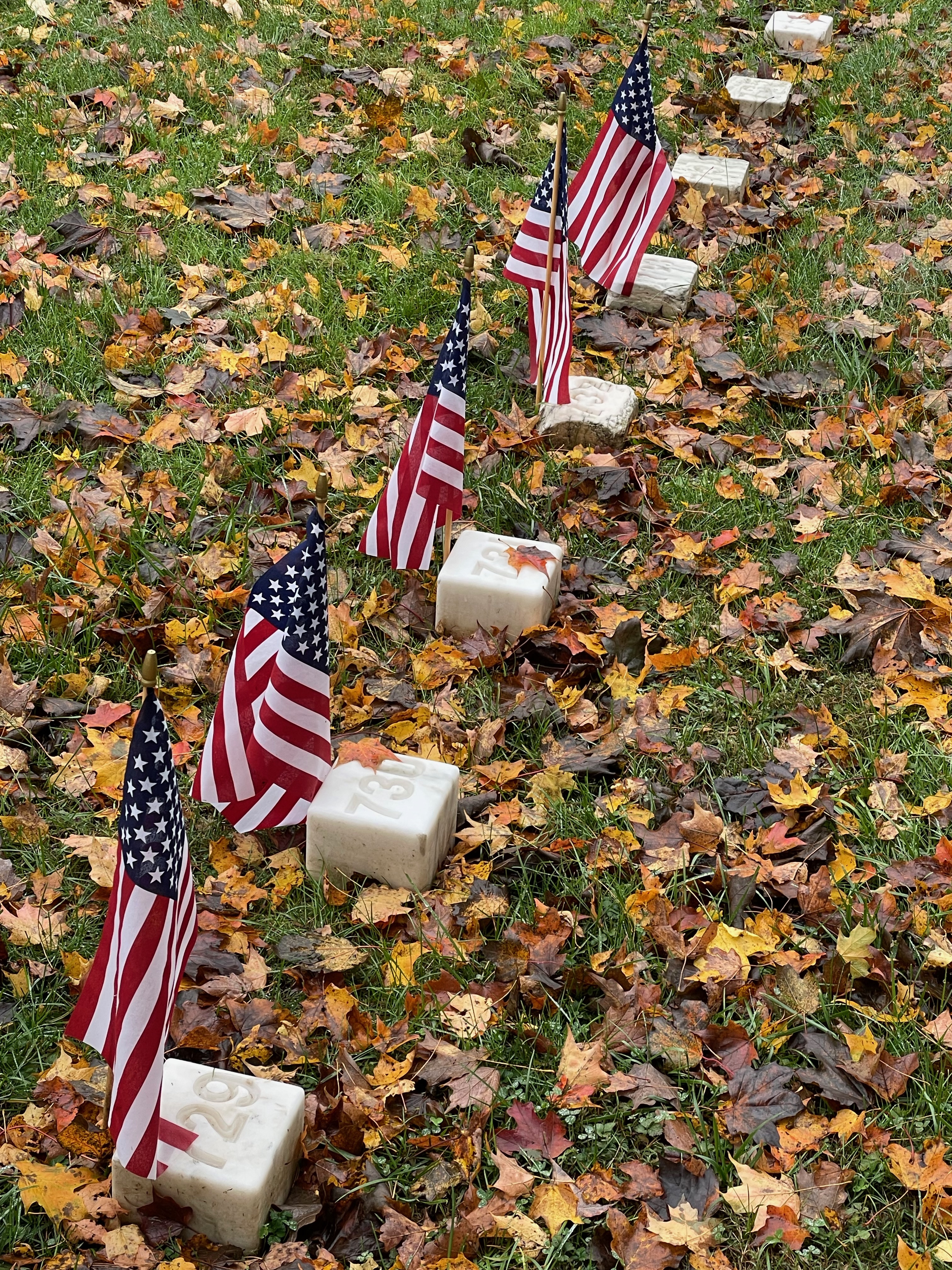
And the Soldiers’ National Cemetery looks like this:

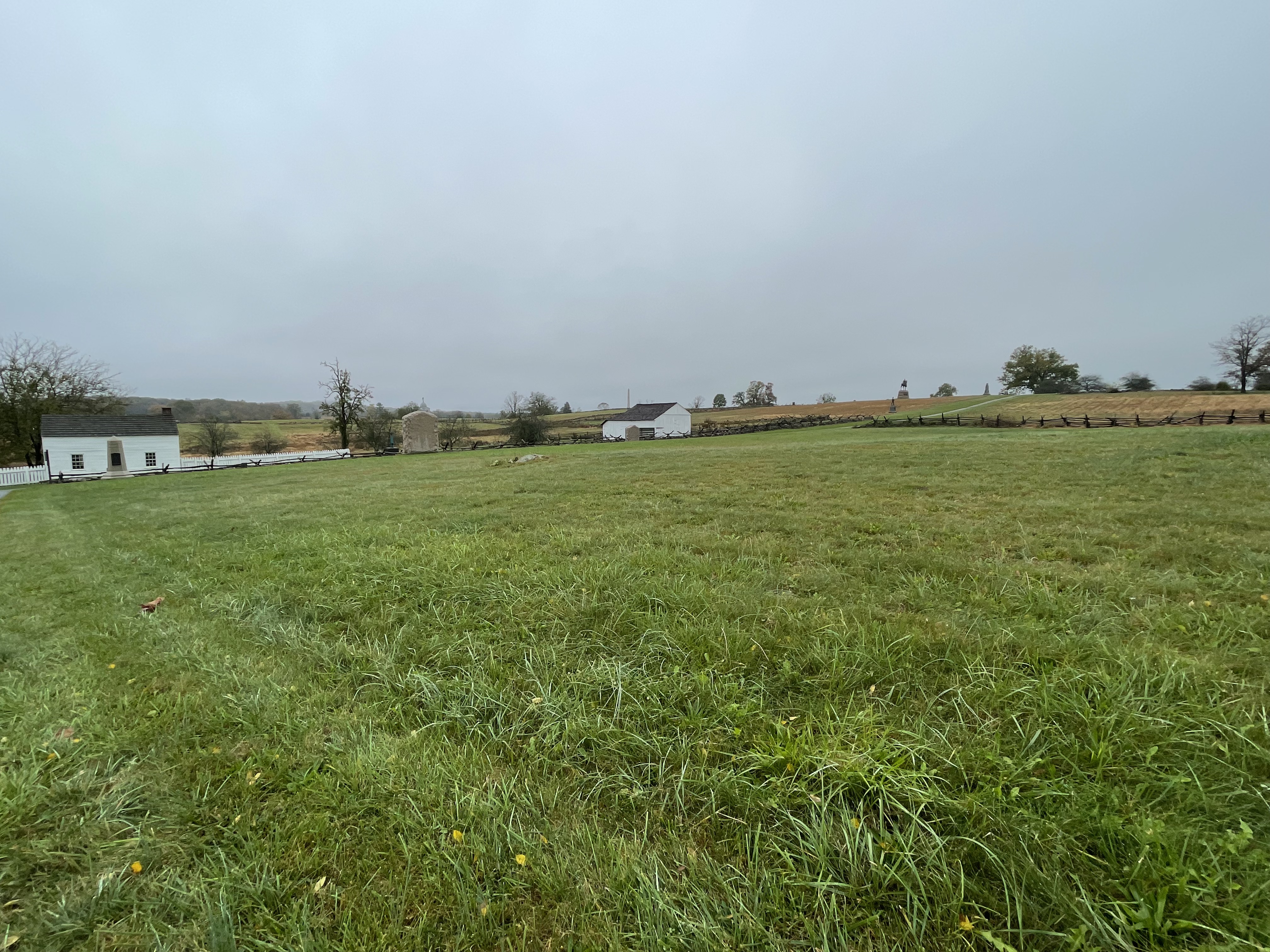
And the fields where the Battle of Gettysburg was fought look like this:
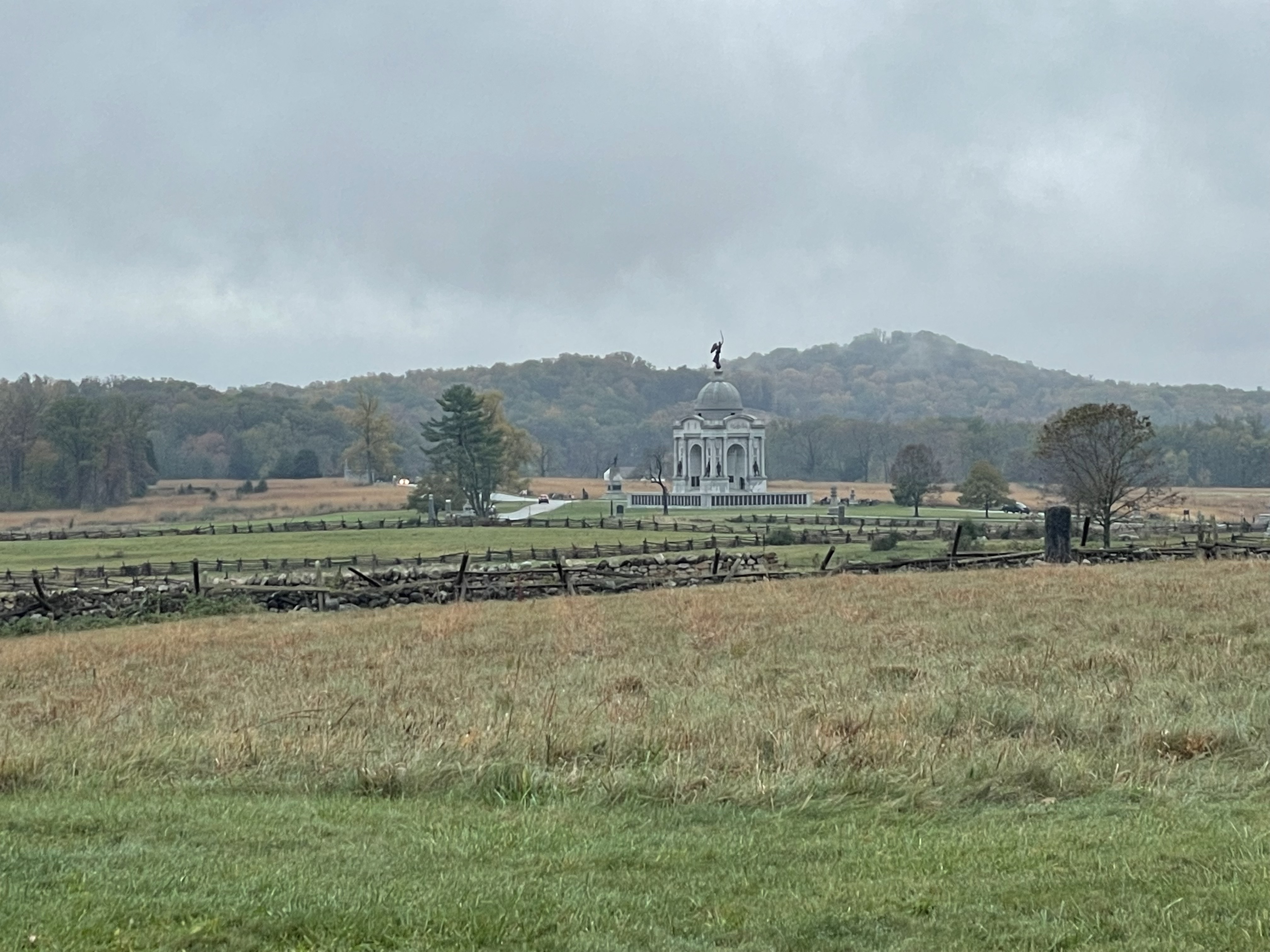
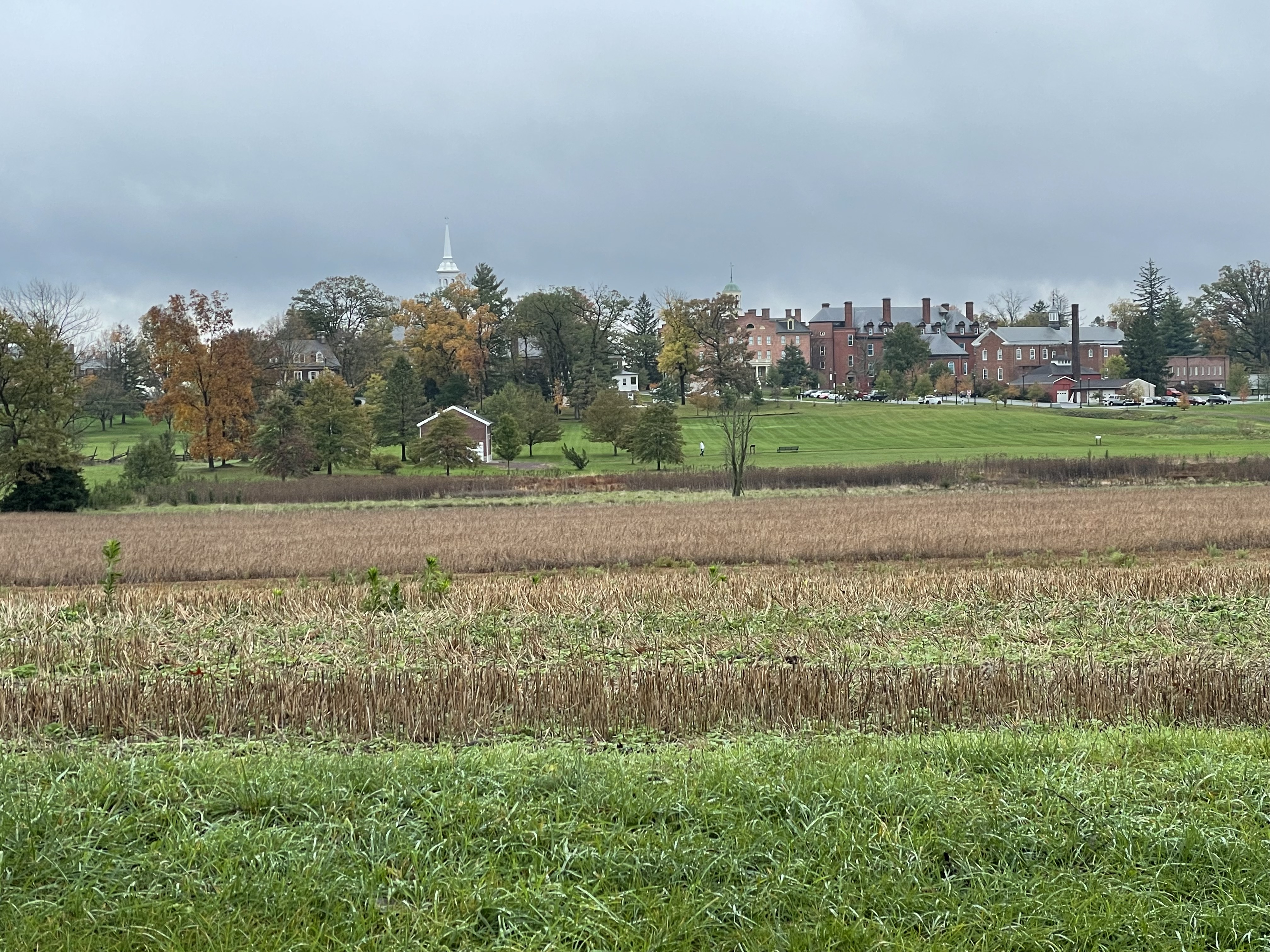
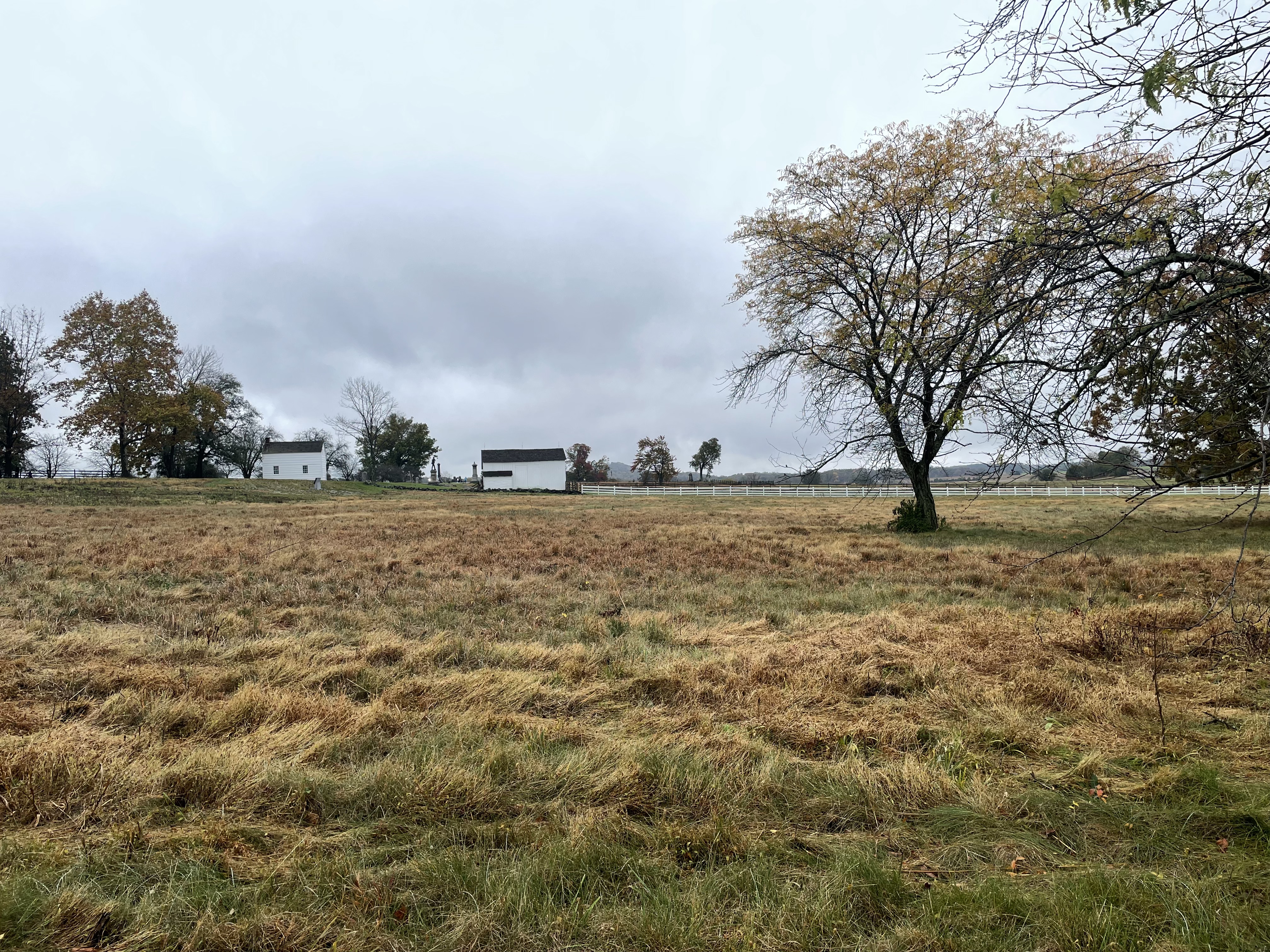
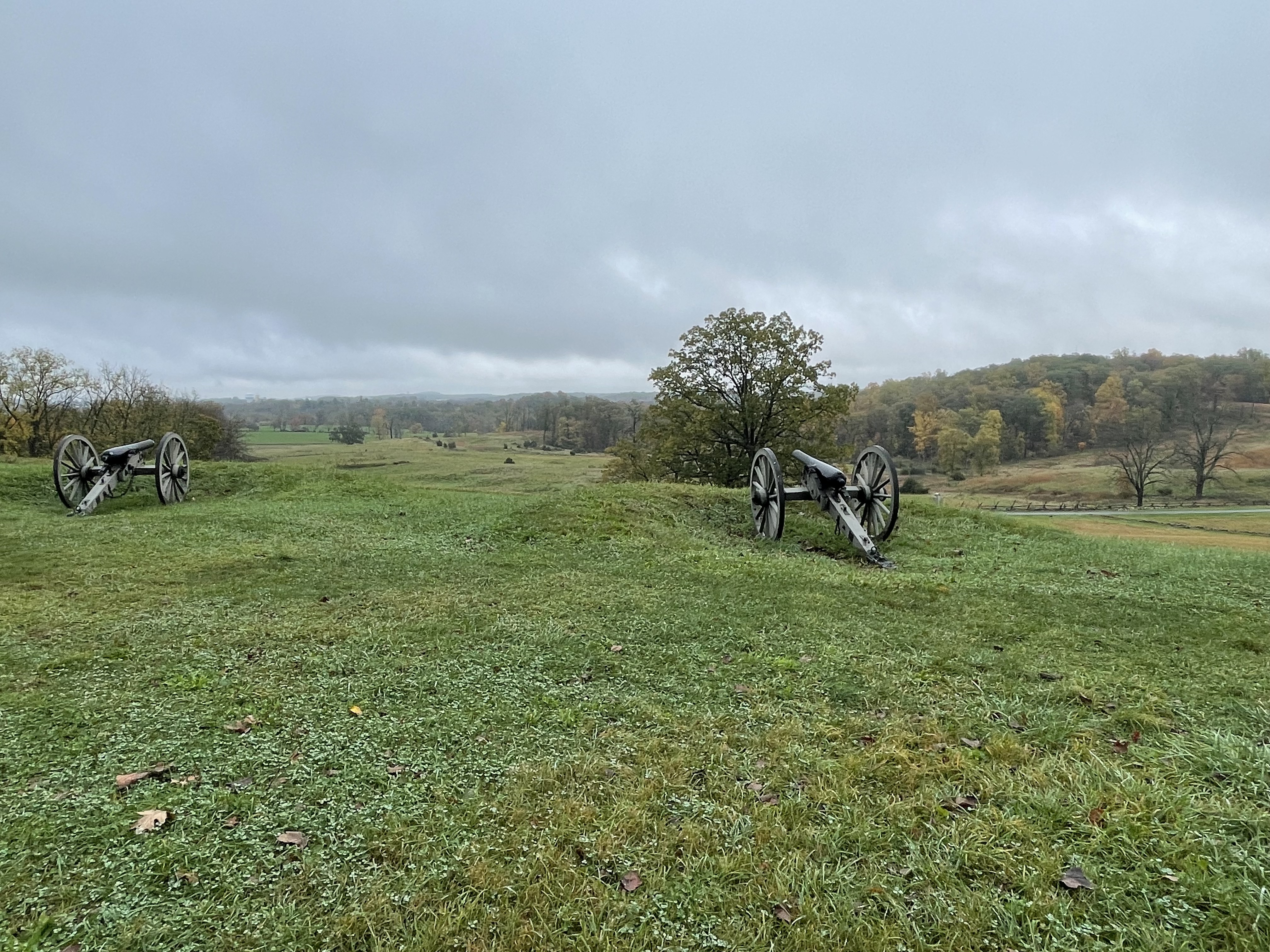
And the statues honoring the site look like this:

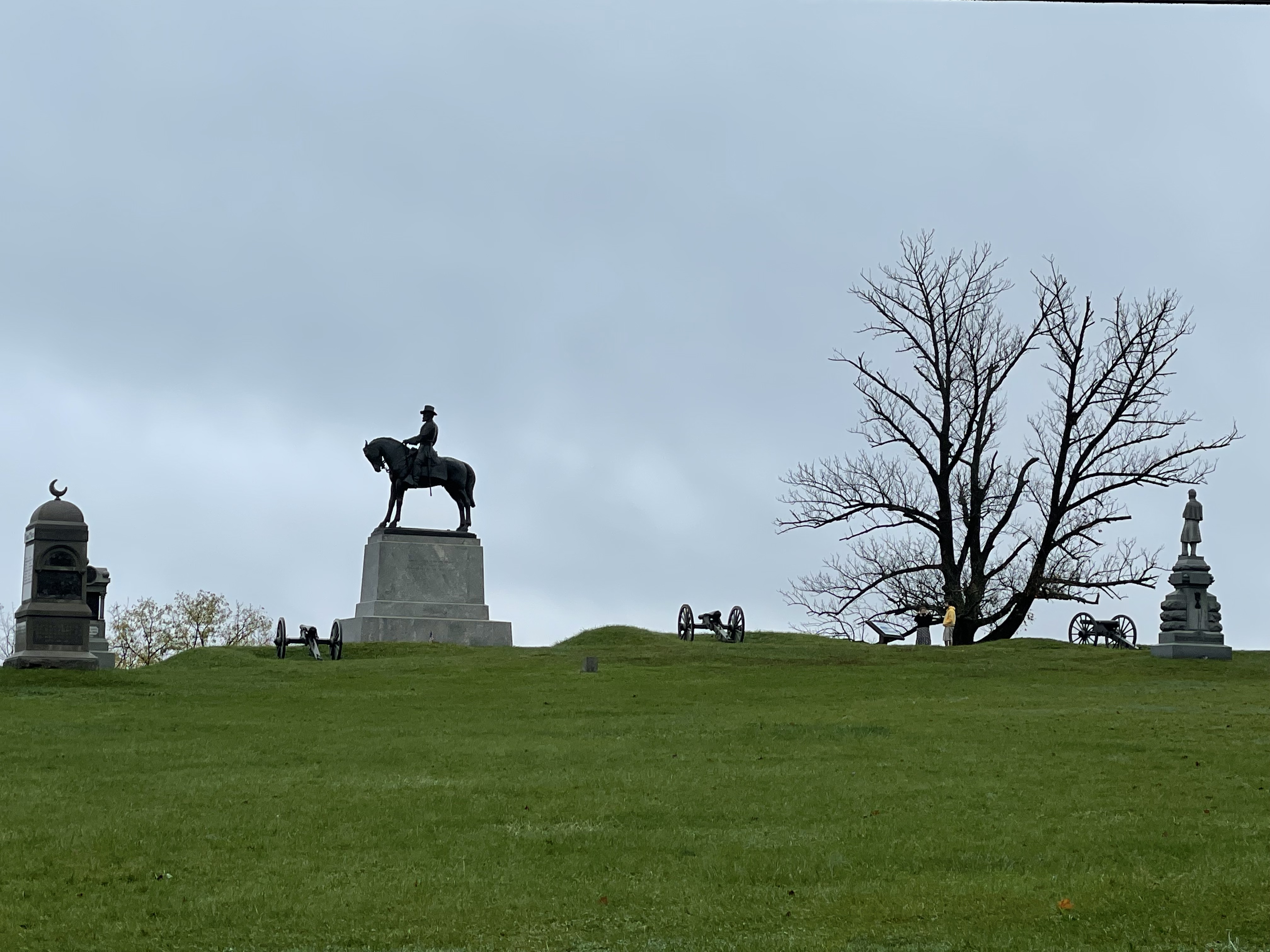
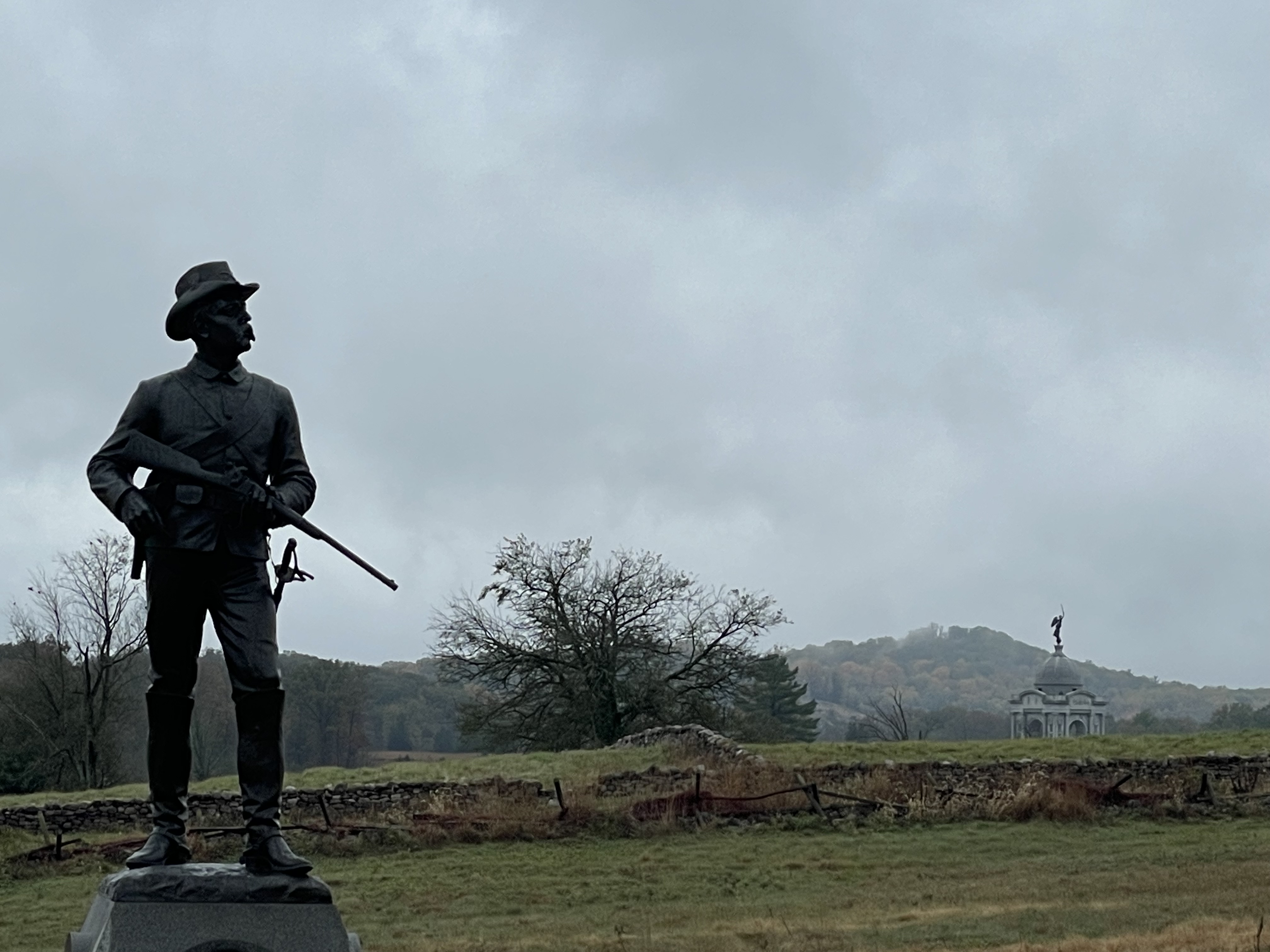
As a head’s up, I was unprepared for Gettysburg. The site is actually huge, taking up the entire town and surrounding vicinity of Gettysburg. In fact, driving is the preferred method for exploring the sites, as there are so many miles between each important scene of the battle. It would be like if a battle took place in-and-around the town of Red Bluff, and you had to explore from Red Bank up to Ide Adobe State Park, over to Berrendos, and throughout the entire town itself. You wouldn’t want to do that on foot! Just look at the map:
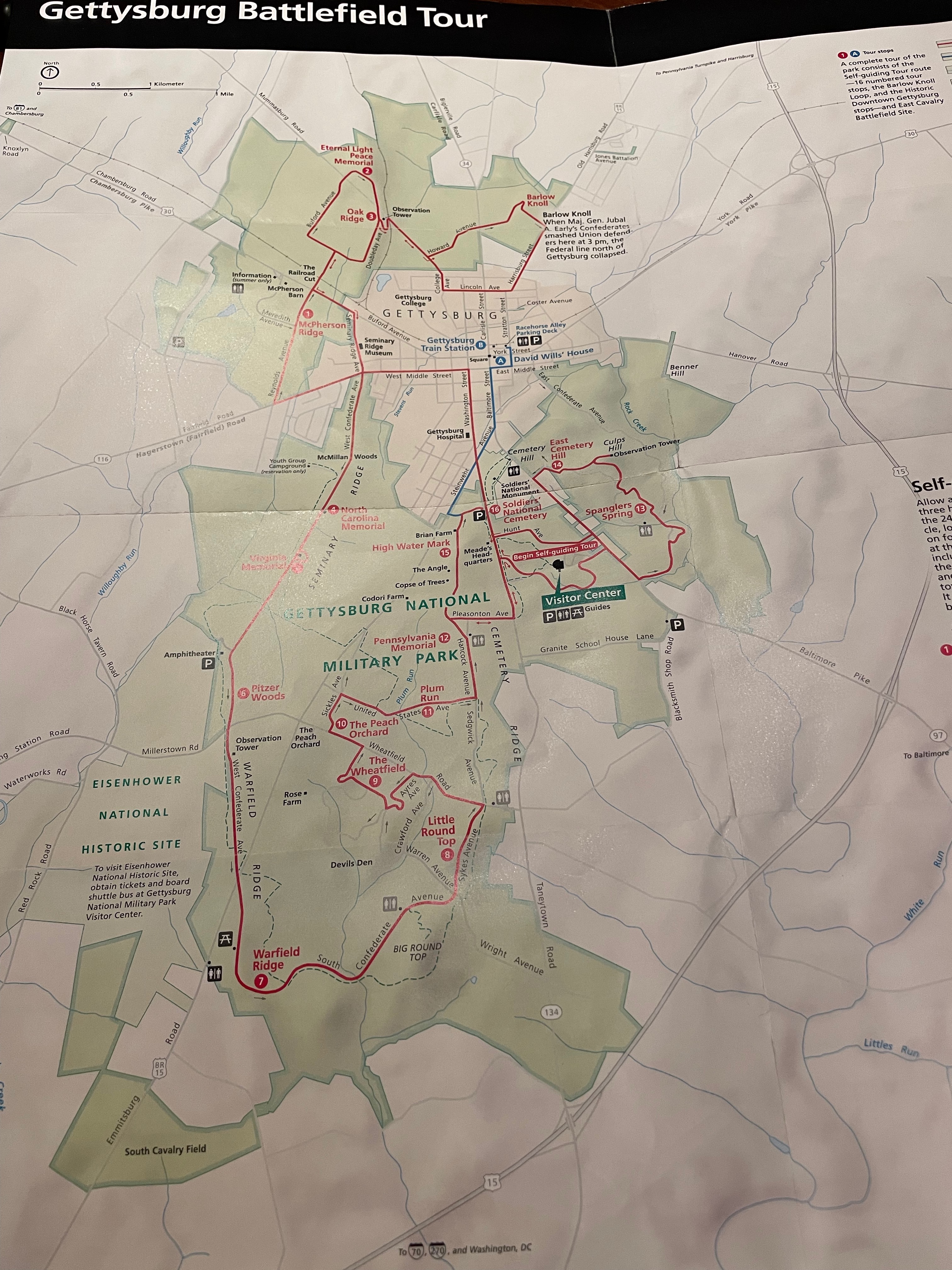
So here is what I recommend (and what I will be doing if and when I go back to Gettysburg): actually book a room in town for at least 2 days. The town itself is pretty cool, and does a good job holding onto its historic look. Then, go to the Gettysburg visitor center and pick up a map. You may also sign up for a tour or ‘hire’ a historian while there, but it is not necessary in today’s age of iPhones (there are so many historians and civil war buffs in the area. I am half convinced that half of History majors in the United States end up as tour guides at Gettysburg). Next, with map and time at your disposal, walk everything! Don’t drive, just take your time, and when you’re hungry go into town to get some food, and then take your time walking the fields some more. There is just so much history at the site that you will drown if you only give yourself a 1/2 day or day like I did. No, this place needs time and is deserving of your attention, so take the time before you visit to fully plan your trip here. Okay, advice over.
My trip to Gettysburg was awesome, and I saw most, but not all of the sites. By early afternoon, I unfortunately had to call it quits, as I was heading on to my next Civil War sight: Antietem.
More to follow!
Cheers,
Rob
 robtaylortravels
“walk everything!” Amen. Too many cars in parks. Gettysburg battlefield roads become a parking lot in summer months.
LikeLike