10/30/21
“Almost Heaven, West Virginia
Blue Ridge Mountains, Shenandoah River
Life is old there, older than the trees
Younger than the mountains, growing like a breeze
Country roads, take me home, to the place I belong
West Virginia, mountain mama, take me home on country roads.”
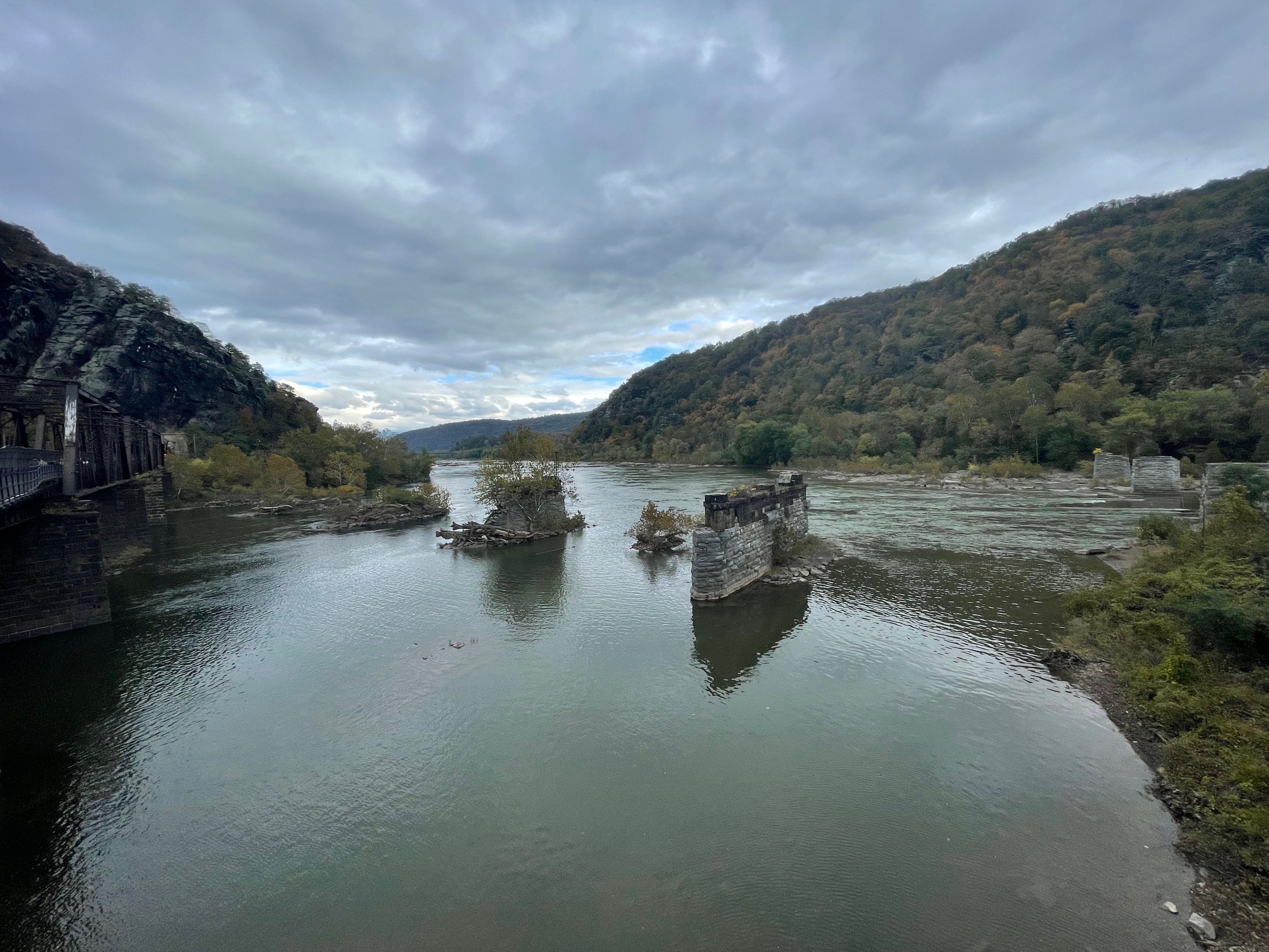
I couldn’t help but sing the famous John Denver song throughout my time at Harpers Ferry. Not only does my presence here mark the start of my own trip back home on country roads to Omaha, but my time here at Harpers Ferry, at this spot where the Potomac and Shenandoah Rivers meet and form the borders of Maryland, Virginia, and West Virginia, was phenomenal. The place is also the headquarters of the Appalachian Trail. Honestly, my time here wasn’t enough. There was too much to explore, and all of it was so cool! As with Gettysburg, if you plan a trip here, give yourself a day-or-two.
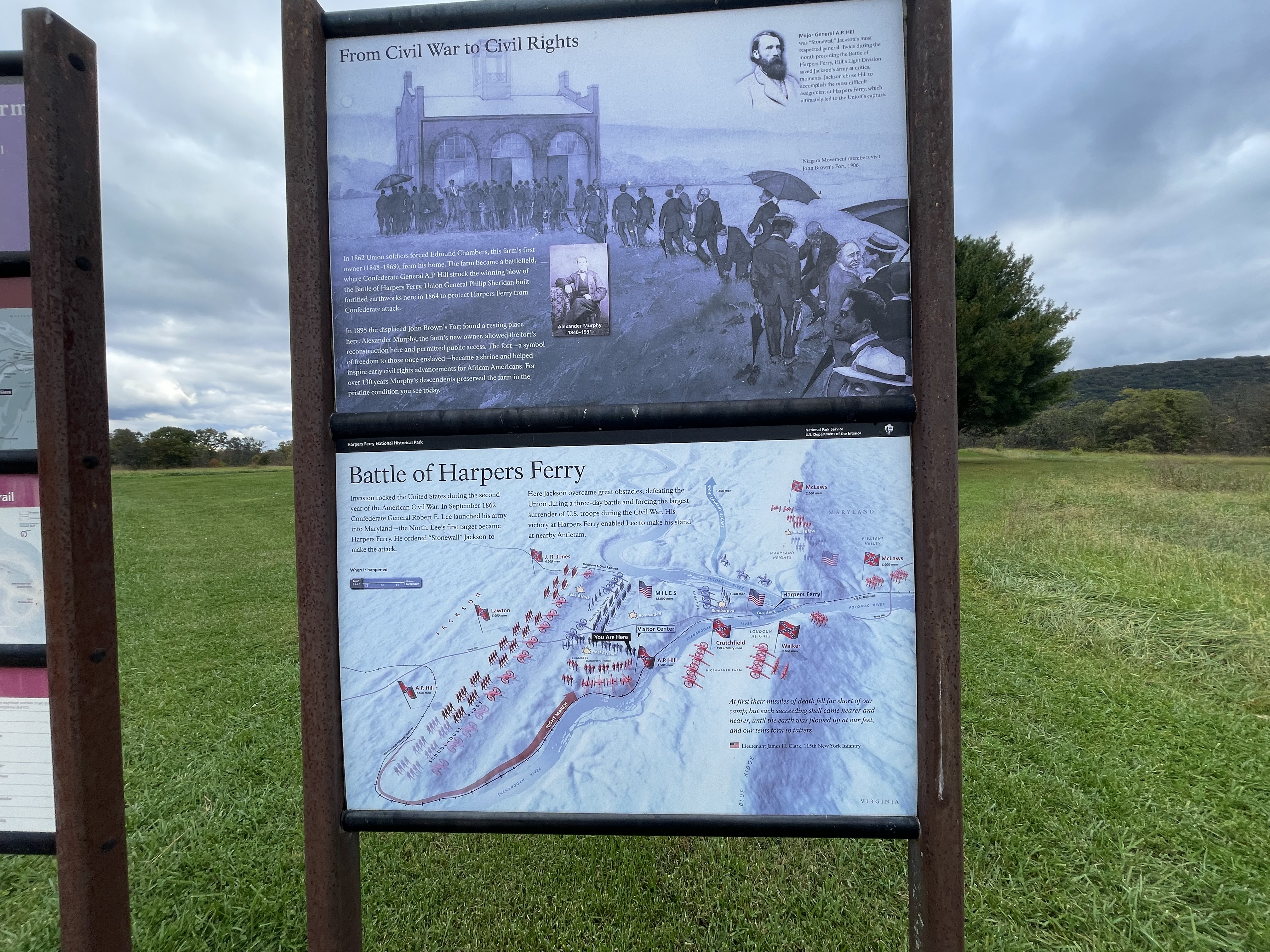
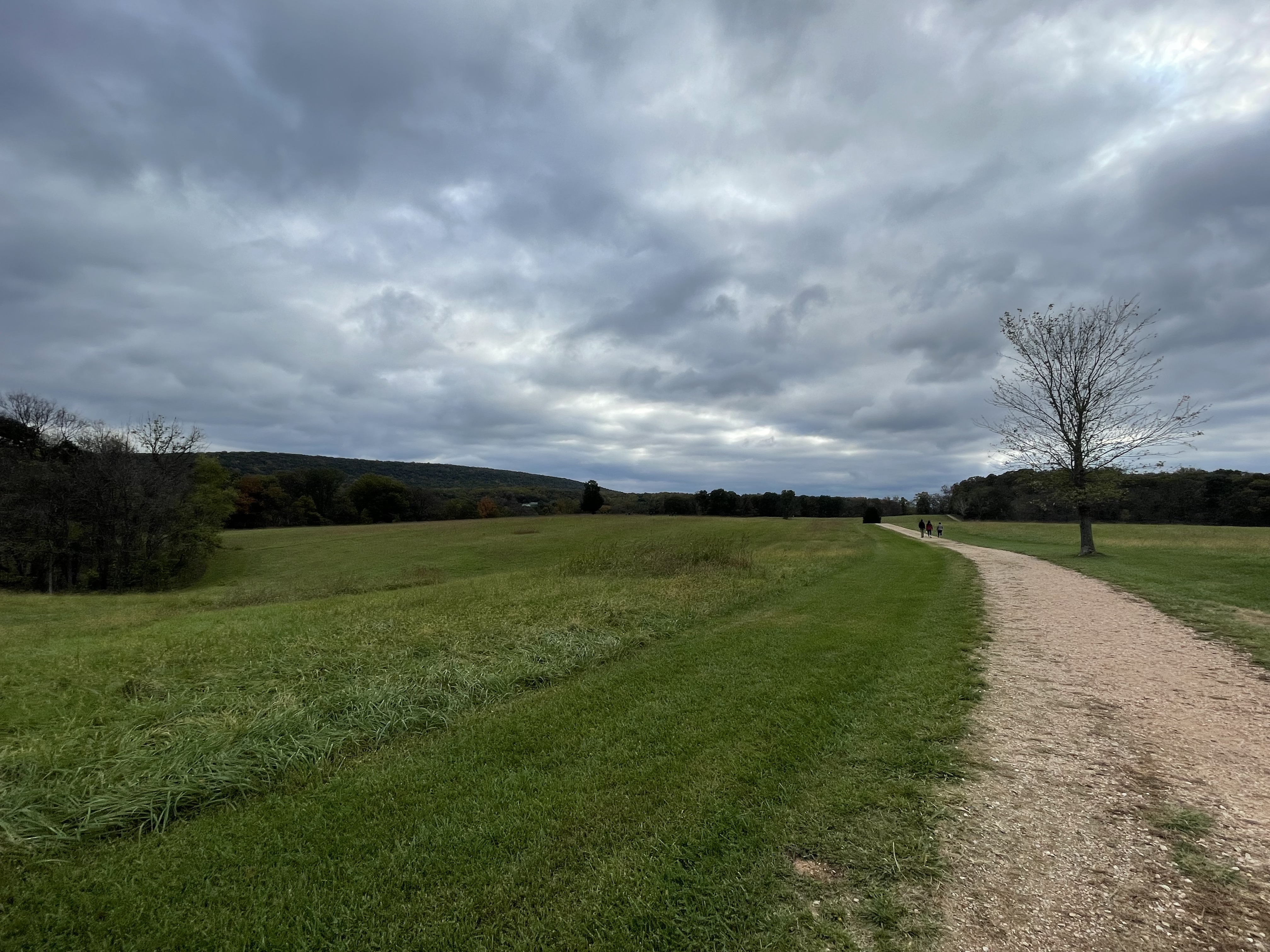
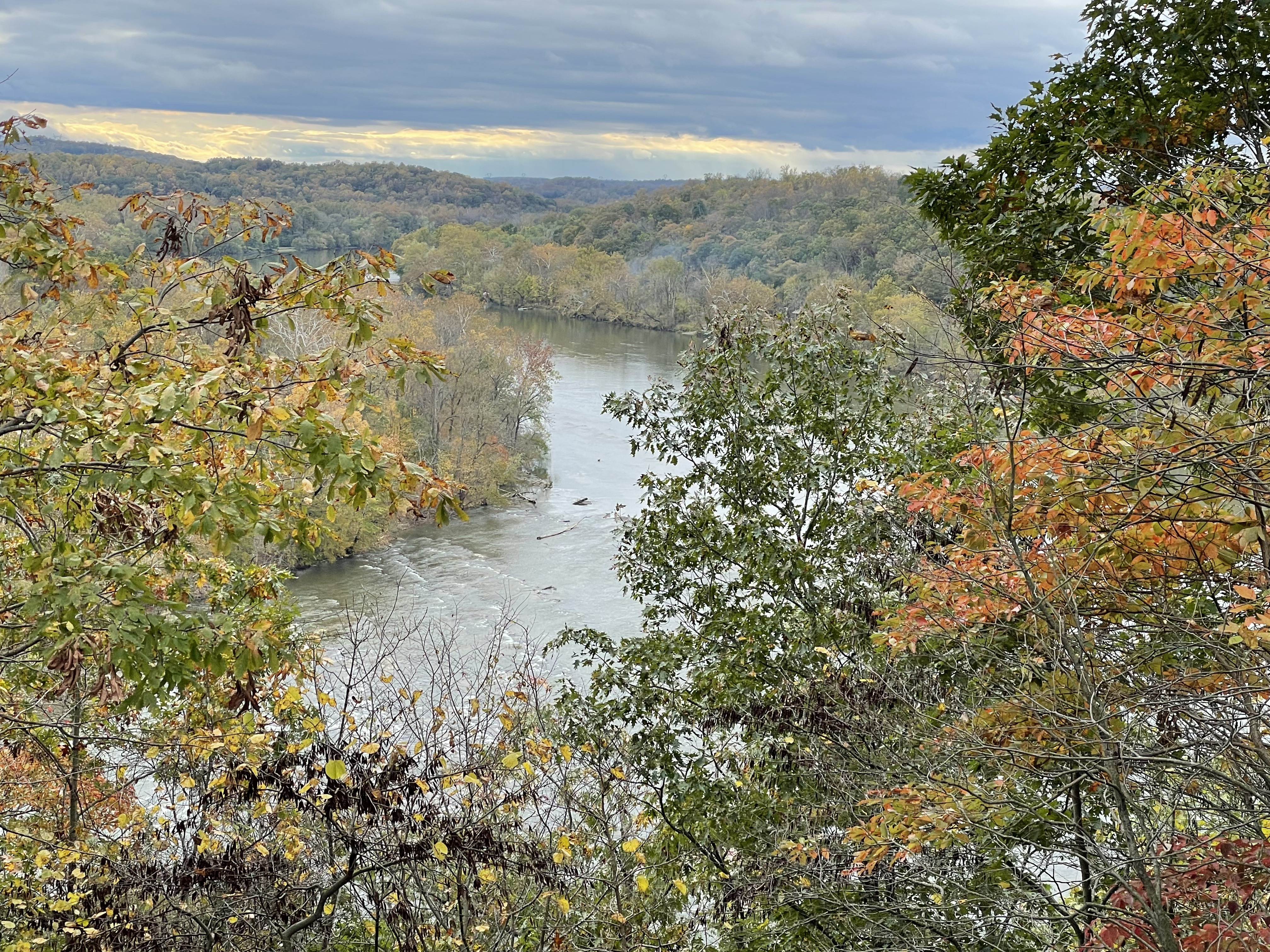
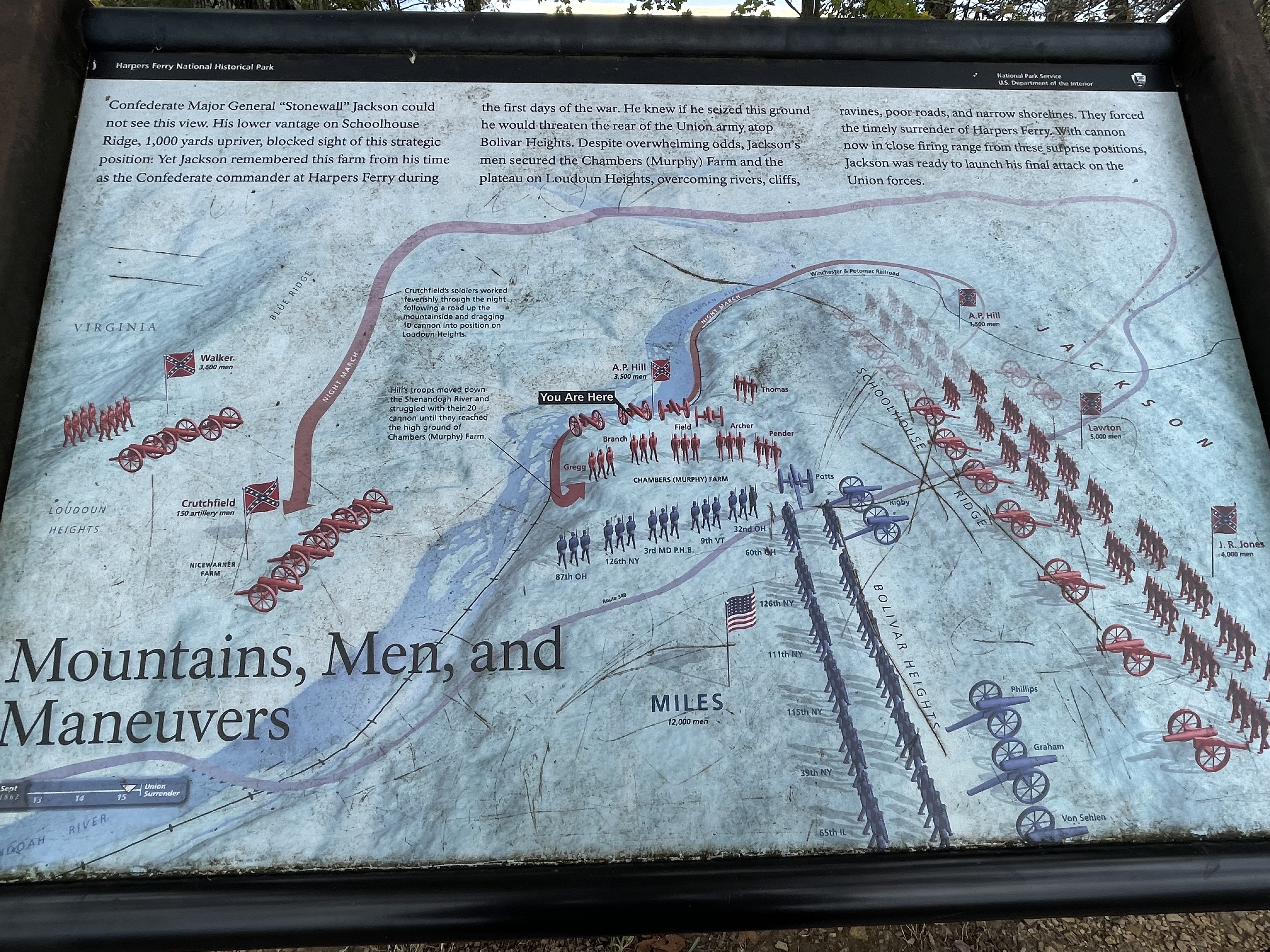
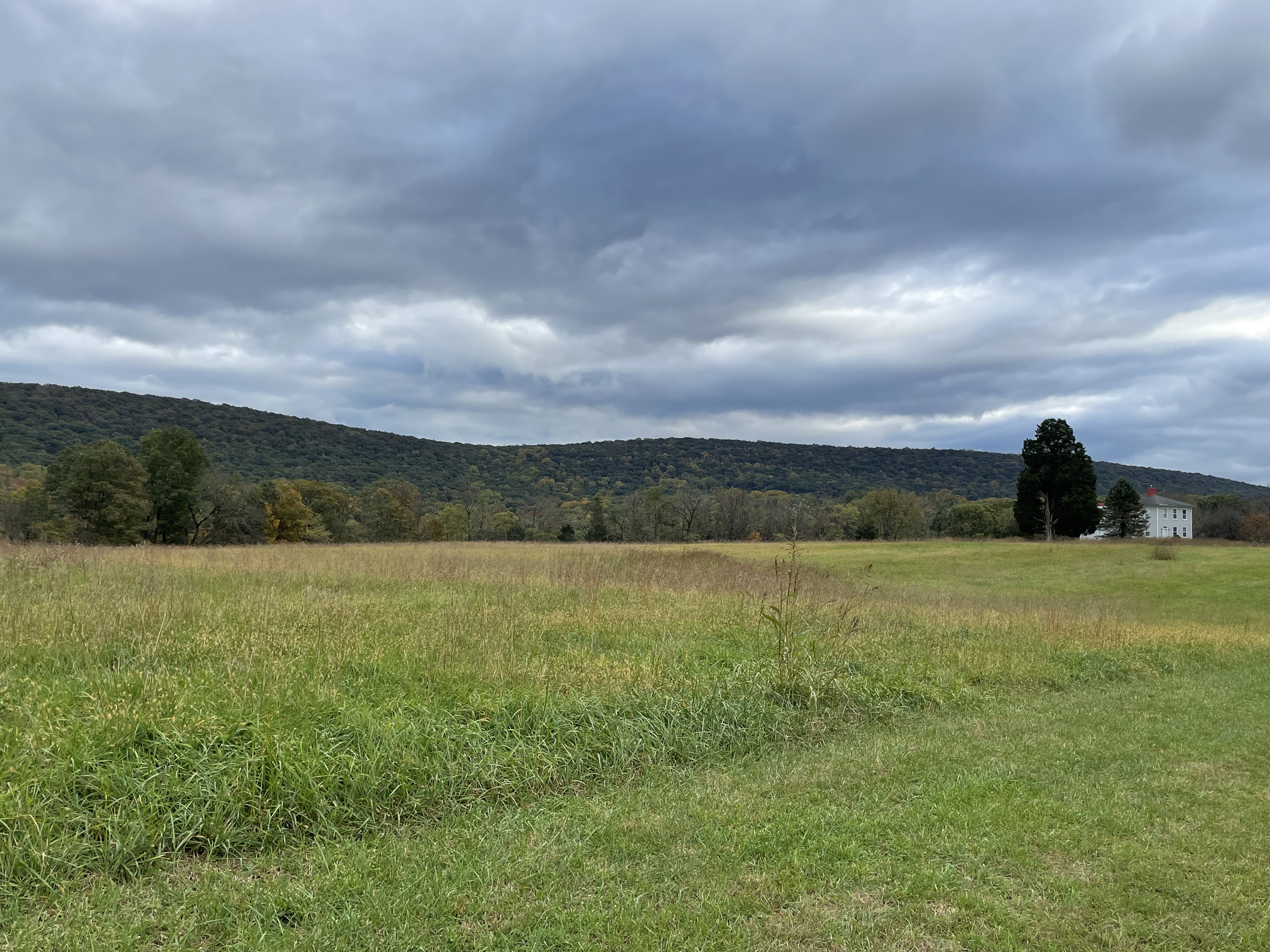
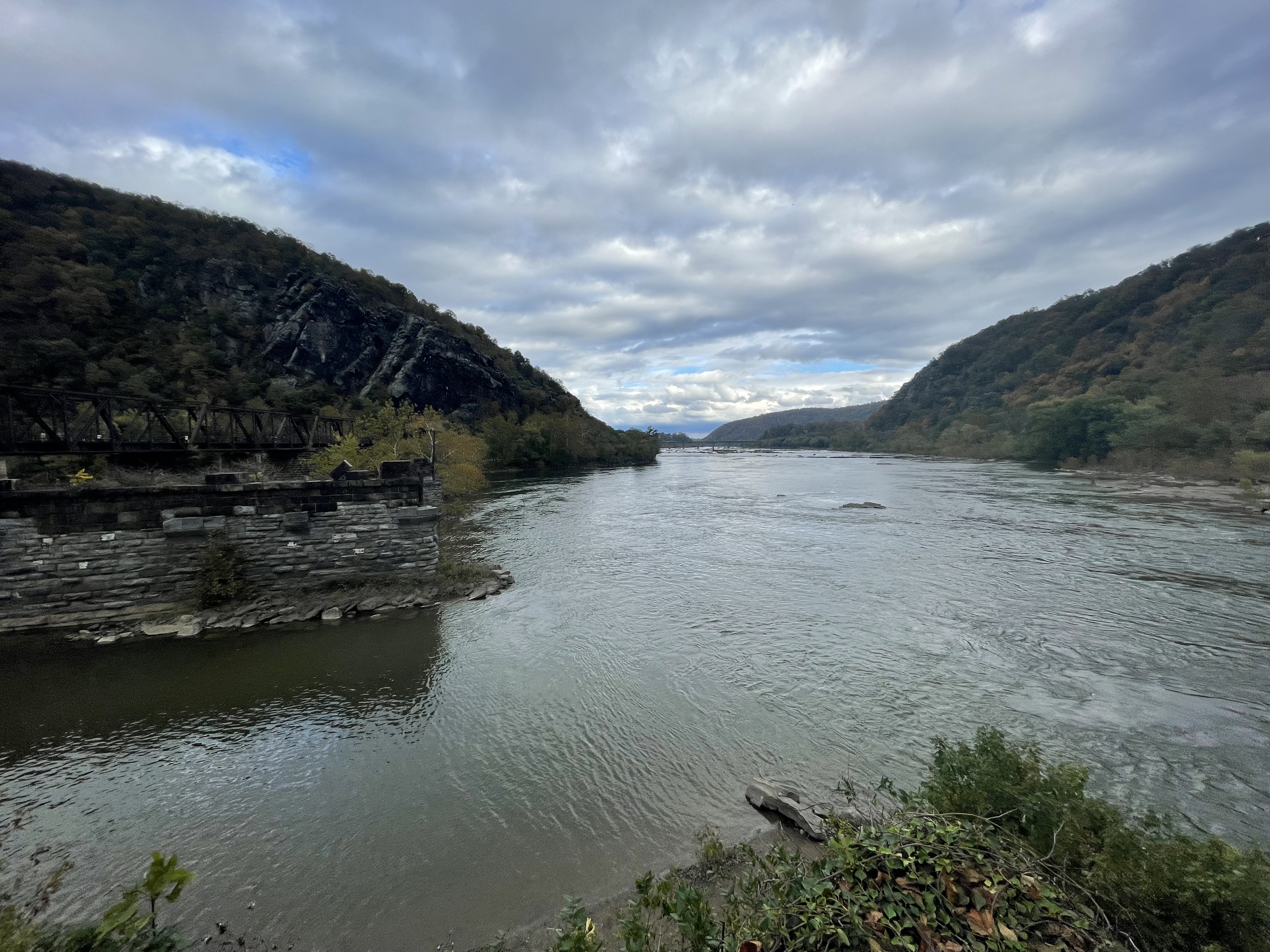
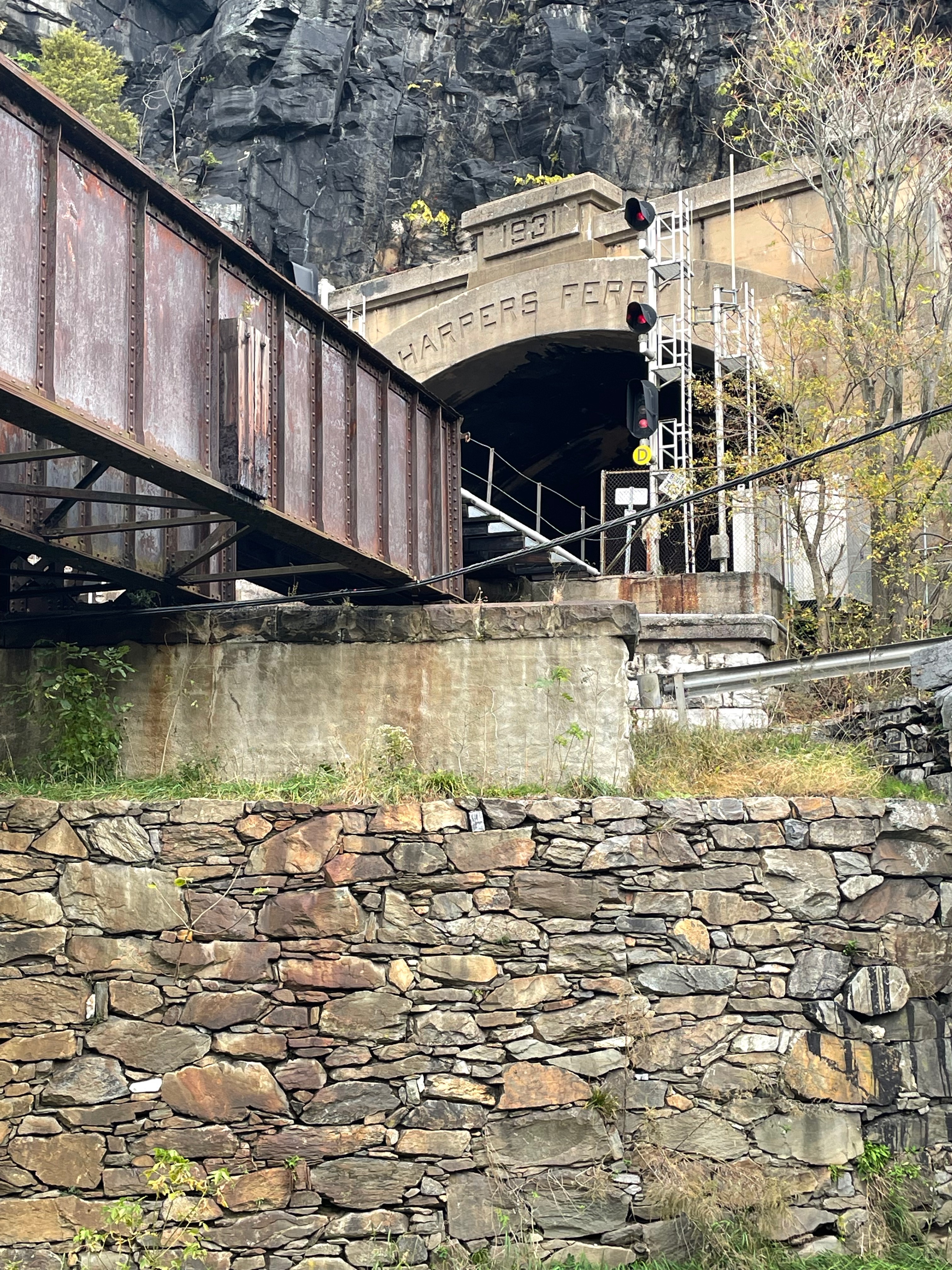
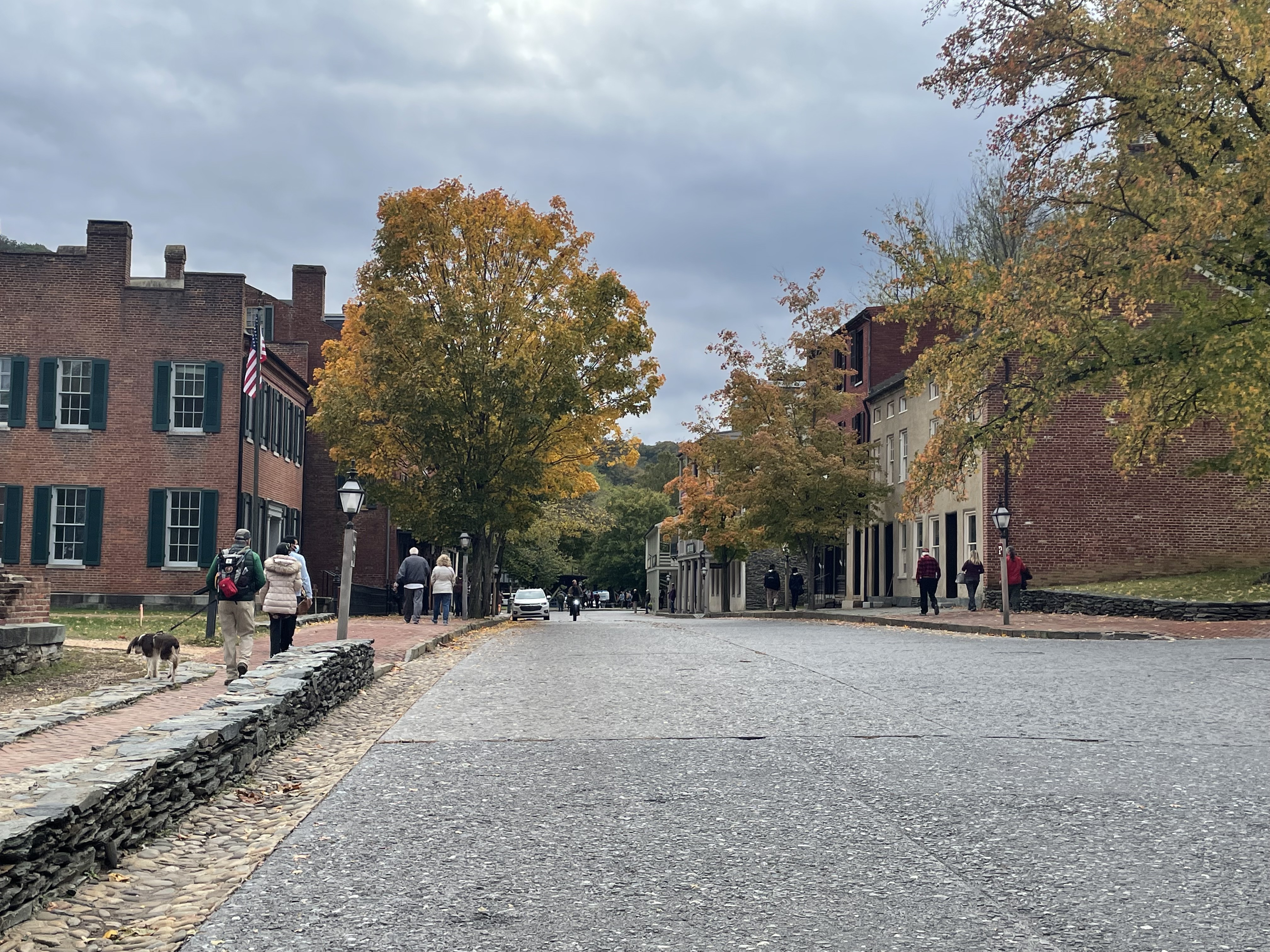
There is so, so, so much history to this place, I don’t think I can do it justice with a single blog entry (but I will at least give you the ‘Wikipedia overview” below). As I stated above, this is the site of the confluence of the Potomac and Shenandoah Rivers, and during the Civil War this place was for some time the northernmost point of Confederate-controlled territory. The Confederacy, especially Generals Robert E. Lee and Stonewall Jackson, considered the place necessary in terms of strategy to win the War. I think they were right on that point, as, if the South had held it, the site would have provided a ready supply line and staging point towards Washington DC.
In the 1700s, the site was originally a ferry run by Robert Harper (hence the name…Harpers Ferry). Thomas Jefferson used to regularly visit Harpers Ferry as a spiritual and recreational retreat, and considered it “perhaps one of the most stupendous scenes in nature” (it is jaw-dropping in terms of its natural beauty). George Washington also visited it, and after the US was formed, Washington proposed it as a site for an armory. George’s brother, Charles Washington, founded the nearby town of Charles Town where I’m spending the night tonight.
Railroads reached the area as early as 1833, and together with the confluence of the rivers and the place’s location as an entrance to Virginia and Maryland (i.e. as a place where one could get supplies ready for a push towards DC, Baltimore, and Philadelphia), the strategic importance of Harpers Ferry was clear to both the US government and those who would later try to do it harm.
On October 16, 1859, Harpers Ferry was the site of John Brown’s raid, where abolitionist John Brown led a group of 22 men in a raid on the arsenal that was originally proposed by Washington. Five of the men were black. The raid was initially successful, seizing buildings and preparing to use the weapons therein to arm slaves, but then they were caught and the raid was violently quashed. In fact, Robert E. Lee himself (at that time serving for the US Army) was the one leading the quash of the raid. Brown was tried and hung on December 2, 1859 for attempting to bring about a slave insurrection. The events were a clear harbinger for the Civil War to come.
…And then the Civil War did come, and Harpers Ferry became the top target for General Lee’s invasion of the North. The place regularly changed hands throughout the War, and was later dubbed “easy to seize, and hard to hold.” The town of Harpers Ferry would change hands back and forth between Confederacy and Union eight times between 1861 and 1865, and most of its buildings were decimated from shelling. The biggest capture and victory was that of Lee and Jackson’s in September 1862, after which Lee would regroup at Sharpsburg, kickstarting the Battle at Antietam (where I visited earlier today). The grassy field pictures above were where the 1862 Battle of Harpers Ferry occurred. The land was apparently farmland owned by the “Murphy family” and, later the Union promised to compensate the family for the lost land. The Union never held to its promise (typical American government) and later the lands were annexed into the National Site.
Whew! What a trip this has been. As I said above, Harpers Ferry marks the start of my return to Omaha. However, before I get there I will be spending the next few days in Kentucky, the second State that I am considering for a move. Why am I considering moving there? Well, in one word…bourbon.
To be continued…
Cheers,
Rob
 robtaylortravels
Know a terrific real eastate agent in Kentucky
LikeLiked by 1 person