Hello Readers,
Today is Memorial Day here in the United States. It is a day where we honor those soldiers who made the ultimate sacrifice during the course and scope of their duty, and I decided to celebrate in proper fashion by visiting the battlefield of Little Bighorn in Montana, and then following up with a visit to our national treasure, Mt. Rushmore in South Dakota.
I woke up this morning in Bozeman feeling shockingly refreshed seeing as I drowned myself in whiskey the night before. From Bozeman, I headed east, driving through the legendary beauty of Livingston, Montana and valley-after-valley of sweet grass fields yielding to snow-capped mountains off in the distance.
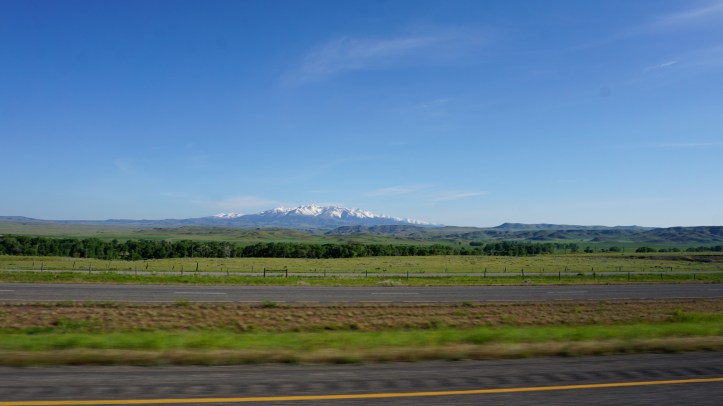 Stuff like this…
Eventually I entered Crow Territory and the mountain-filled horizons yielded to endless hallowed prairie. This was the site of Little Bighorn, a major battle fought on June 25, 1876 between the Lakota, Cheyenne, and Arapaho Indians against the United States Army. The battle is more commonly known as Custer’s Last Stand, as the famed Lt. Col. Custer had a not-so-great day that day as he and over 260 of his soldiers met their demise to the natives of the region who were seeking to protect their ancestral ways of life.
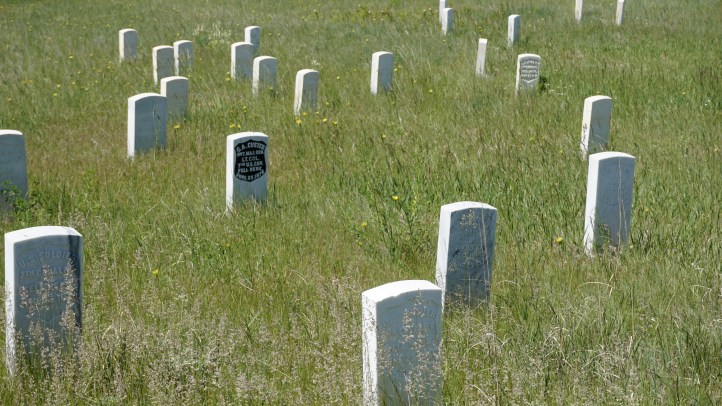
Like I said, he had a not-so-great day.
The Little Bighorn Battlefield is interesting because they decided to memorialize the site by burying all of the soldiers and natives who perished that day at the spot where they died. As such, you have graves littering the grassy landscape over the course of about a half-square mile, and the layout of the graves gives you a great sense of how the battle proceeded to its ultimate conclusion at the top of Last Stand Hill.
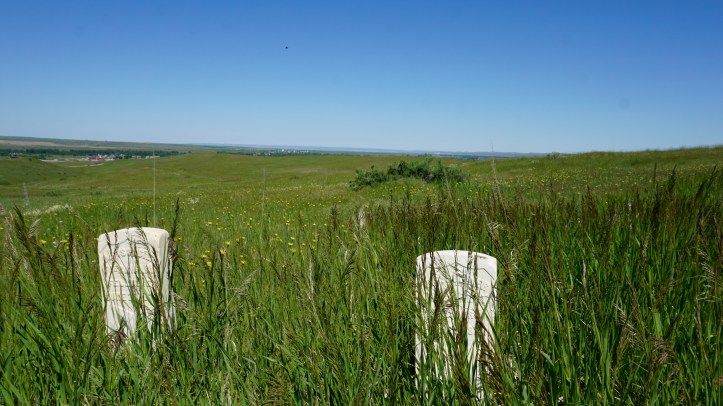
Examples of a few graves.
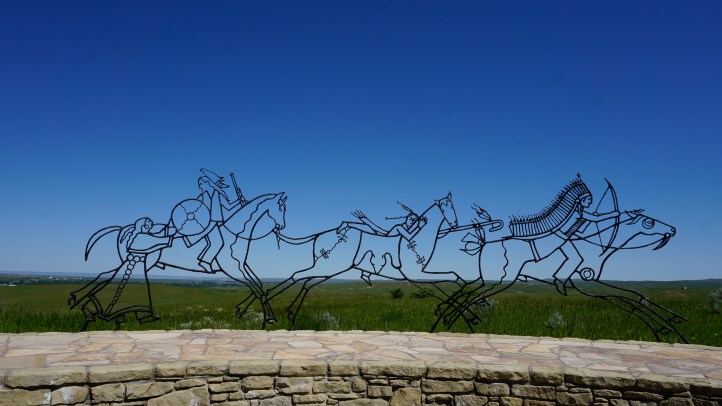
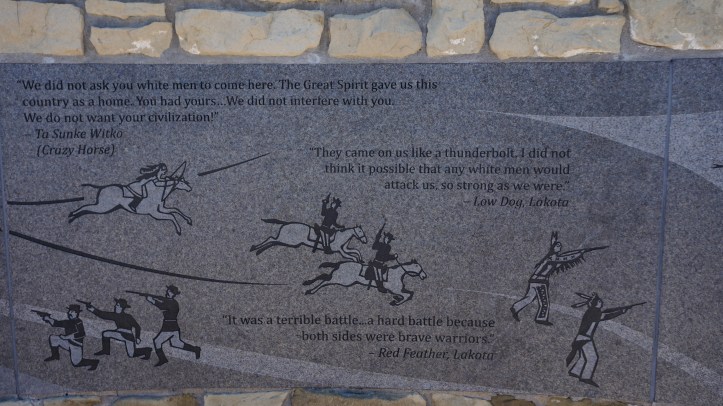
Another great thing about the Battlefield is that it did not glorify the American philosophy, but rather spent much time educating and memorializing the philosophy of the Indians who were fighting that battle, not as barbarians, but as warriors seeking to preserve their dying culture. An excellent memorial to this end was created under the signature of George H.W. Bush and is provided just across from Last Stand Hill. I spent a lot of time studying Indian Law and Native American cultures in law school and beyond, and seeing this level of respect for our native cultures made me happy. The memorial of course does not make up for the atrocities that our native populations suffered at the hands of Europeans and Americans, but it is good to finally see American policies recognizing and acknowledging the existence of those atrocities, and doing what it can now to give voice to these peoples.
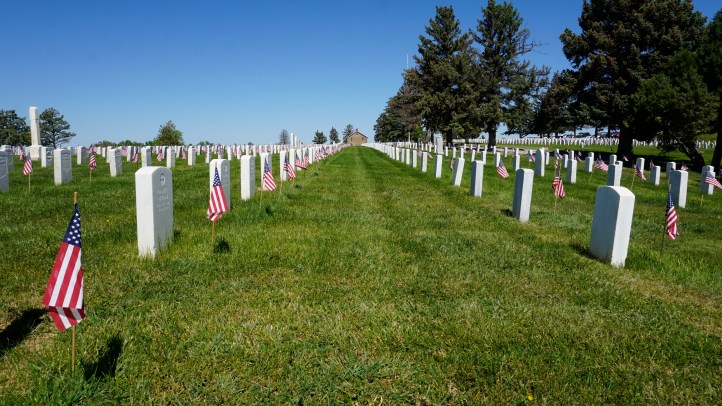
After I was done walking around the Battlefield, I took some time to solemnly walk through the National Cemetery and honor those soldiers of more recent wars who gave the ultimate sacrifice. The number of graves here was insane, and it’s crazy to think that this represents only a small, minuscule percentage of all the lives that have perished in wars past.
Because it was Memorial Day, a ceremony was also occurring. Held by veterans and local natives, it also hosted Senator Steve Daines of Montana as keynote speaker, and I got to enjoy the honor of hearing him speak about the importance of American preeminence, both in its own borders and throughout the world. It was actually a great speech. I’m glad I got to witness it.
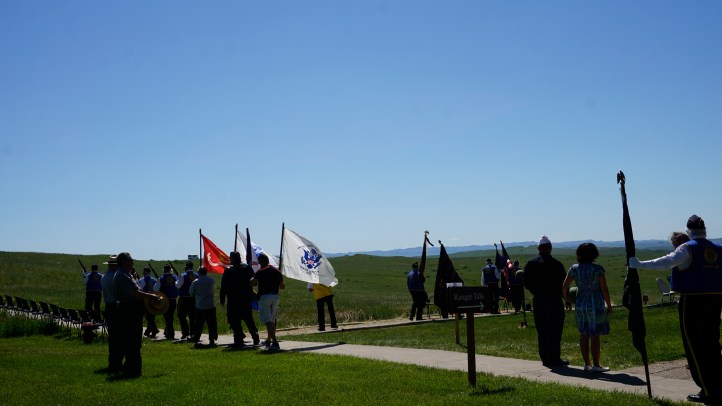
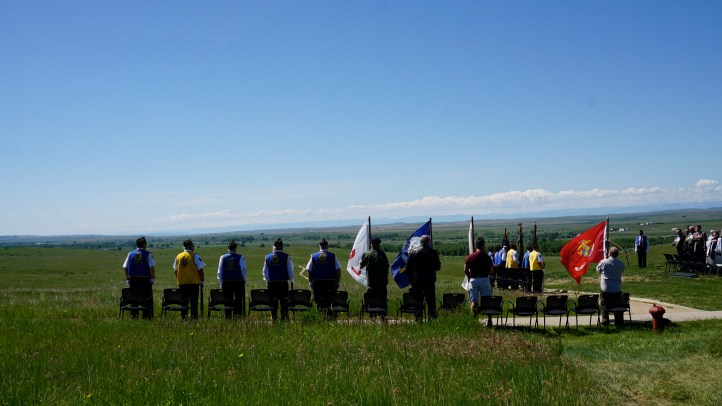
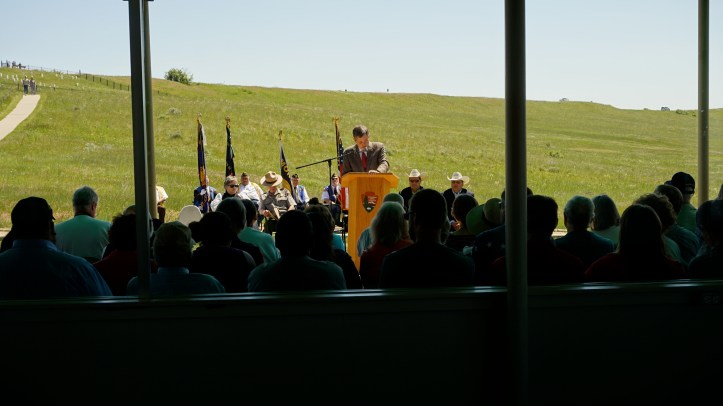
Senator Daines speaking at Little Bighorn – Memorial Day 2017
After leaving Little Bighorn, I continued to head east and pushed into the South Dakota Black Hills to see one more memorial: Mt. Rushmore. I had never been here before, and was worried it was going to be a cheesy tourist trap. I was pleasantly surprised to find that the mountain lived up to its hype and reputation. It is stunning to witness its grandeur and majesty in person, and it seems to impress no matter what angle or place you are viewing it from.

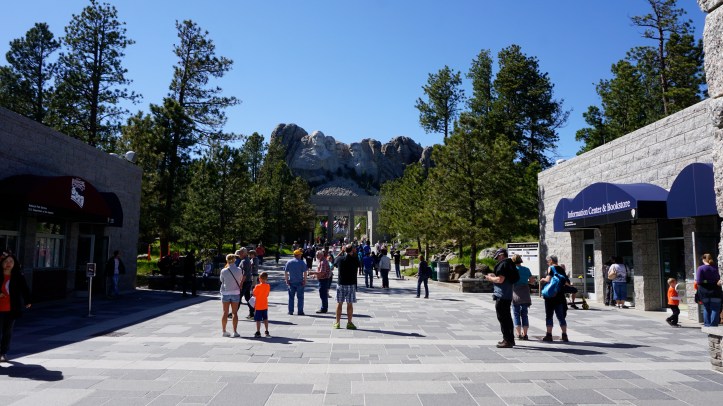
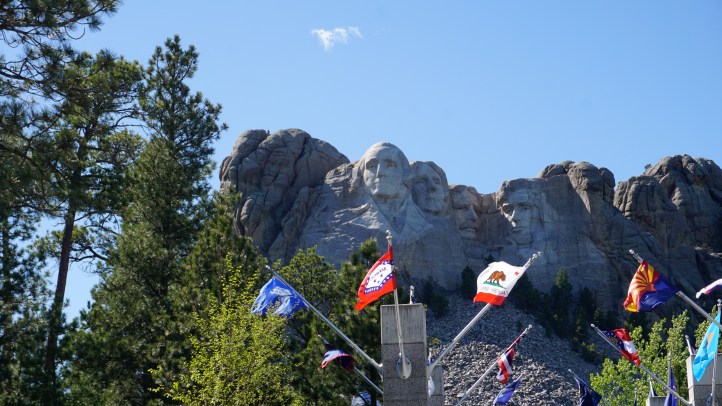

‘Merica.
So I won’t go too deep into the history, but Mt. Rushmore was the vision of a man named Gutzon Borglun. He started pitching the idea in the 1920s, and started work on the monument in 1927. It was originally thought that creating the mountain-sized sculpture would only take 5 years and would cost $500,000. Yet, after sinking well over $1,000,000 and more than a decade into the project, it was ultimately abandoned in 1941 to better streamline funding and resources towards World War II. Yes, that’s right. Mt. Rushmore is an abandoned project. It’s not supposed to look like it looks. This was Borglun’s model of his original vision:
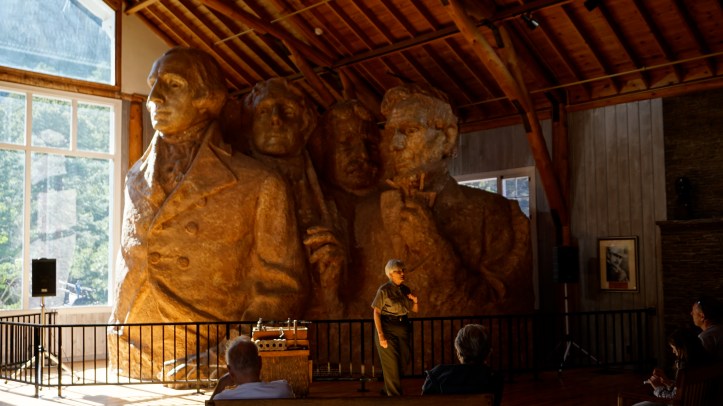
Honestly, I’m kind of happy the project was never finished. While these mountain-sized statues would have been impressive to behold, there is something mystical about leaving the monument in an unfinished state, still attached to the land and nature of which it is a part. Also, I never knew why the Presidents chosen were the Presidents on the monument, but there is a clear reason for the choices. They were respectively chosen to represent the founding, growth, preservation, and development of the United States. George Washington represents the founding of the country. Thomas Jefferson, the actor behind the Louisiana Purchase, represents the nation’s growth and expansion. Abraham Lincoln, who held the country together during the Civil War, represents the nation’s preservation. Finally, Teddy Roosevelt, who in the 1920s was still fresh on the minds of Americans, represents the move of the United States to being a global power and an actor in world affairs. Doesn’t that make a lot of sense? I was never told that before, and now feel like the monument’s choices are just…obvious!
Anyways, that was my fun, eventful day. Tonight I’m holed up in Rapid City, South Dakota (I’m just taking it easy tonight…no night out on the town), and tomorrow I’m heading to Omaha to shake some hands and see some friends and family. Very excited to spend some time back in my original hometown!
Cheers,
Rob
 robtaylortravels
[…] I am no stranger to big-name outdoor travel sites, having previously traveled to Lake Louise and Mount Rushmore, so I already knew the drill: get there early, and even then prepare for crowds and a whole lot of […]
LikeLike
[…] Little Bighorn, Montana and Mt. Rushmore, South Dakota (Memorial Day, 2017) […]
LikeLike